ISO 14644 Explained: Cleanroom Classes for Doors and Windows
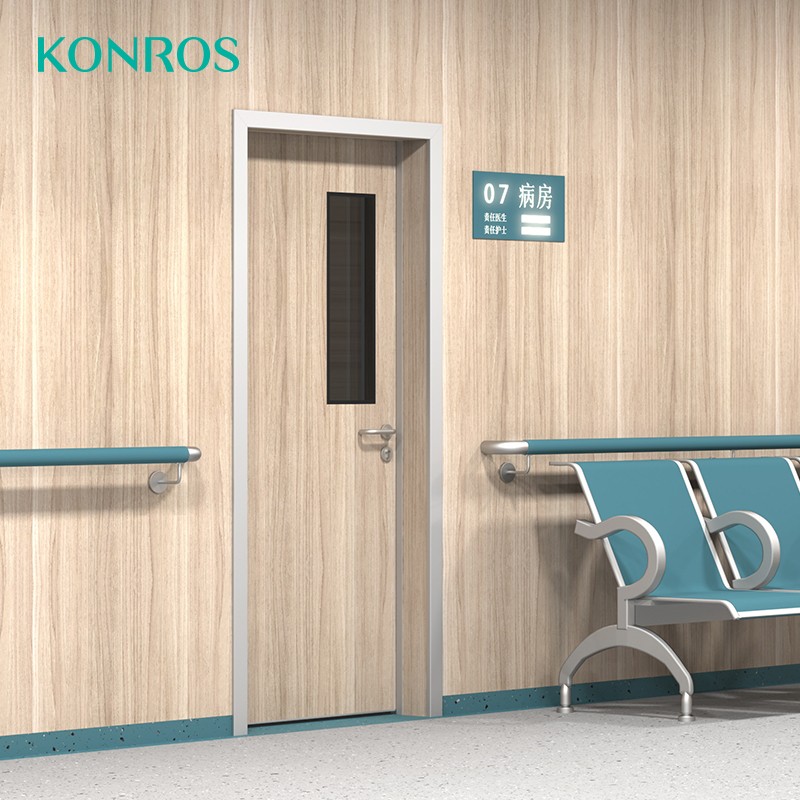
Most cleanroom door enquiries arrive with a single line in the specification: "Doors shall be suitable for an ISO Class 7 cleanroom, in accordance with ISO 14644." The sentence is short, but the standard behind it defines everything from how many particles a room may contain to how two doors in an airlock must behave. If you buy, specify or install doors and windows for controlled environments, you do not need to read all nine parts of ISO 14644 — but you do need to know which parts change your product decisions. This guide translates the standard into door language.
What ISO 14644 Actually Is
ISO 14644 is a family of standards for cleanrooms and associated controlled environments, prepared by ISO technical committee TC 209. Four parts matter to door people:
- ISO 14644-1:2015 — Classification. Defines the nine cleanroom classes (ISO 1 to ISO 9) by airborne particle concentration. This is the part your tender is quoting. (Official ISO page)
- ISO 14644-2:2015 — Monitoring. Requires a documented, risk-based monitoring plan to prove the room keeps meeting its class. (Official ISO page)
- ISO 14644-3 — Test methods. How rooms are tested: particle counts, airflow, pressure difference, recovery time.
- ISO 14644-4 — Design, construction and start-up. Where airlocks, pressure cascades and interlocked doors are specified.
One point that saves confusion later: ISO 14644 classifies rooms, not products. There is officially no such thing as an "ISO Class 7 door" — the door is a component that helps a room achieve and hold its class. Suppliers who quote a door class are using shorthand for "tested in and suitable for that environment."
The Nine Classes in One Table
ISO 14644-1:2015 Table 1 sets maximum particle concentrations per cubic metre of air. The column buyers actually check is particles ≥0.5 µm — the size used in most pharmaceutical and hospital specifications:
| ISO Class | Particles ≥0.5 µm per m³ | Particles ≥5 µm per m³ | Typical use |
|---|---|---|---|
| ISO 5 | 3,520 | 29 | Sterile filling, isolators |
| ISO 6 | 35,200 | 293 | Sterile preparation support |
| ISO 7 | 352,000 | 2,930 | Compounding, aseptic prep |
| ISO 8 | 3,520,000 | 29,300 | General pharma, CSSD storage |
| ISO 9 | 35,200,000 | 293,000 | Ambient controlled zones |
Each step down a class allows roughly ten times more particles. ISO 1 to ISO 4 are semiconductor and nanotechnology territory — extreme environments where even a standard clean room door is a special engineering project. Hospital and pharma projects almost always live between ISO 5 and ISO 8.
Note for readers of older specifications: the 2015 edition removed the intermediate classes (ISO 1.5, 6.3 and so on). If your drawing shows a decimal class, it was drafted against the 1999 edition and should be rounded to the nearest integer class before you order.
As Built, At Rest, In Operation
The same room can carry a different class depending on when it is measured, and ISO 14644-1 recognises three occupancy states: as built (equipment in, no people, no process), at rest (equipment running, no people) and in operation (people working, process live). A room certified ISO 7 at rest may legitimately measure dirtier in operation — particle counts rise with gowning, movement and the process itself. This matters at the door because a specification that names a class without its state is incomplete: the door has to hold the "in operation" condition, when doors are being opened, not the empty-room best case. Always confirm which state your tender's class refers to before comparing door performance data.
Old FS 209E Names Still on Drawings
Federal Standard 209E was retired in 2001, yet "Class 100" and "Class 100,000" still appear in tender documents from some markets. The conversions are simple:
- Class 100 → ISO Class 5
- Class 1,000 → ISO Class 6
- Class 10,000 → ISO Class 7
- Class 100,000 → ISO Class 8
The old class numbers counted particles per cubic foot; ISO counts per cubic metre — so the numbers look unrelated even though the cleanliness levels line up almost exactly.
Which Class Is Your Room?
In pharmaceutical projects under EU GMP, the room grades map onto ISO classes "at rest" — the room empty of people and process: Grade A/B aseptic zones correspond to ISO 5, Grade C to ISO 7, Grade D to ISO 8. A hospital CSSD sterile storage area is typically ISO 8 — our CSSD door selection guide covers that department's steam and trolley traffic in detail. Compounding pharmacies in the US run ISO 7 ante-rooms with ISO 7 or ISO 8 main rooms depending on category; semiconductor fabs push down toward ISO 3–5 at process steps. The class, plus the room's activity ("at rest" vs "in operation"), is what your doors and windows must support — including the aluminium framed glazing that lets supervisors observe the process without entering.
Air Changes per Hour: What the Class Costs in Airflow
A cleanliness class is really an airflow budget. Rooms hold their class by diluting contamination with filtered air, and the practical planning numbers look like this:
| Cleanliness level | Air changes per hour (typical design range) |
|---|---|
| ISO 5 (unidirectional flow) | 240–360 |
| ISO 6 | 90–180 |
| ISO 7 | 30–60 |
| ISO 8 | 10–25 |
| Conventional building | 2–4 |
These are turbulent-dilution design ranges commonly used in cleanroom engineering practice — ISO 14644-1 itself does not mandate air change rates; airflow is calculated per room from the particle generation of people and process. The table is quoted here because it explains why doors and airlocks matter so much in the higher classes: the cleaner the room, the more conditioned air each opening throws away, and the more the design leans on interlocked doors, tight seals and fast recovery instead of brute-force airflow. A leaking door in an ISO 6 suite is a permanent energy bill; the same leak in an ISO 8 storage room may be tolerable for years.
What ISO 14644 Means for Doors
None of the nine classes contains the word "door". The door requirements come from what a room needs to hold its class:
Airlocks with interlocked doors
ISO 14644-4 defines an airlock as a room with two interlocked doors, arranged so that only one can open at a time. Moving from an ISO 8 corridor into an ISO 7 room, then into ISO 5, is done through a cascade of such airlocks with a pressure step between each zone — commonly 10–15 Pa in GMP facilities, flowing from clean to less clean. For a door supplier this means: magnetic or electric interlock logic, door status signals to the building system, and cycle times your contamination-control team can live with.
Recovery after every opening
Every door cycle lets room air exchange with corridor air. ISO 14644-3 includes a recovery-time test: how quickly the room returns to class after a disturbance. A door that closes slowly, seals badly or drags particles across its own track directly worsens recovery. A hermetic door leaf with perimeter gaskets, drop-down bottom seals and a smooth threshold transition is not decoration — it is how the room passes the test.
Materials that do not shed
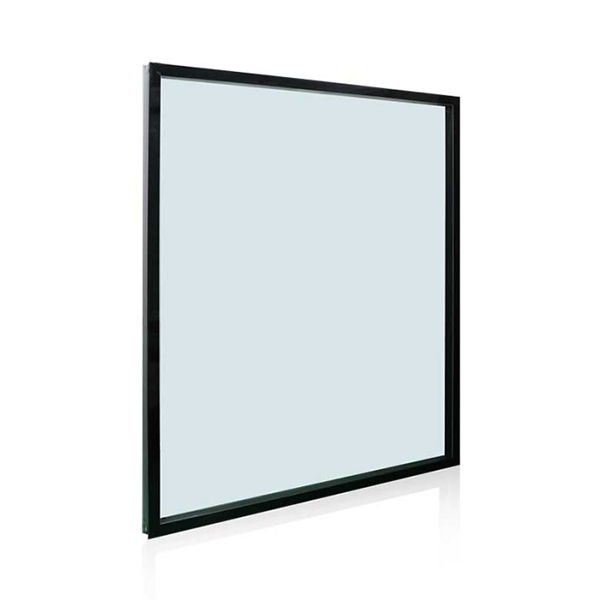
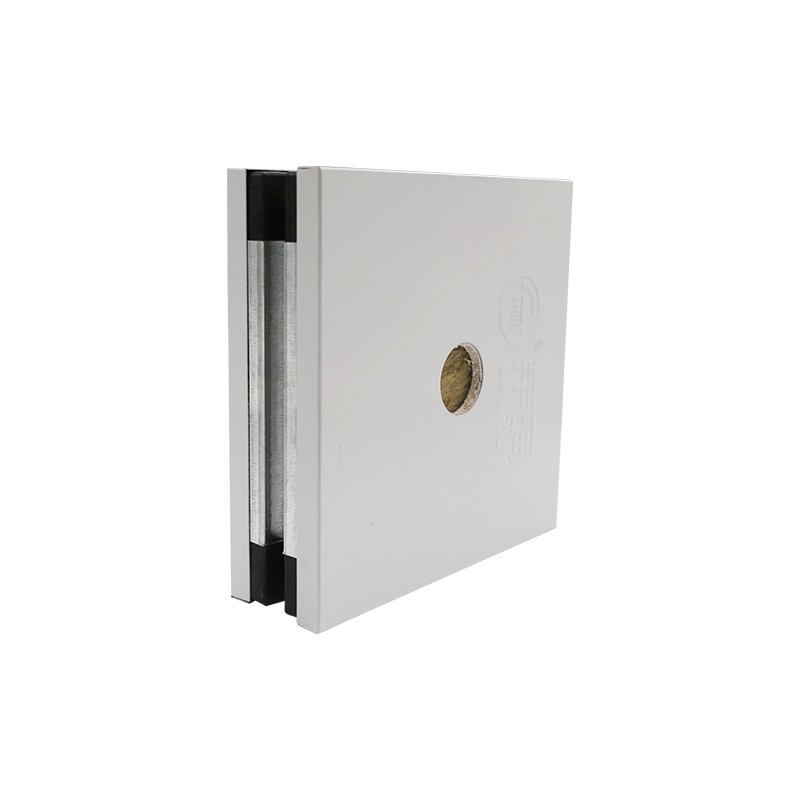
Surfaces in the door zone must be smooth, non-shedding and cleanable. In practice: powder-coated steel or HPL faced leaves over a closed-cell core — our cleanroom panel construction — with cleanroom window units flush-glazed so the glass sits level with the leaf face, leaving no ledge to collect dust. Frames and cover trims in anodized aluminum profile close the joints between door, wall panel and ceiling without exposed cavities.
Monitoring the envelope
ISO 14644-2:2015 replaced fixed test schedules with a risk-based monitoring plan, but the parameters are the same: particle counts, pressure differentials, airflow. Door interlocks and their alarm contacts feed that monitoring — an overridden interlock or a worn bottom seal shows up first as drifting pressure. Typical practice still requalifies airflow and pressure yearly and recovery or containment tests less often, but your plan, not the standard, sets the interval.
What to Ask Your Door Supplier
Because the room is certified and the door is not, the right supplier questions are about evidence, not class labels: What surface finish and core materials are documented? How is the door-to-panel junction sealed? Can the interlock logic drive signals to your BMS, with timed dwell between openings? What factory tests — air permeability, seal integrity — come with the shipment? A supplier working to ISO 14644-4 start-up procedures will answer from drawings, not from a brochure. If you are also specifying glazing, our guide to airtightness classes covers the ratings that pair with cleanroom envelopes, and our clean room door range lists models already installed in ISO 5–8 facilities.
ISO 14644 FAQ
How many cleanroom classes does ISO 14644 define?
Nine, from ISO 1 (extremely clean, semiconductor-grade) to ISO 9 (roughly filtered ambient air). Hospital and pharmaceutical work sits almost entirely in ISO 5 to ISO 8.
Is ISO 14644 a legal requirement?
No — it is a voluntary consensus standard. It becomes binding when a contract, a regulator (EU GMP, FDA expectations) or a national pharmacopoeia references it, which in pharma projects is nearly always.
What is the difference between ISO 5 and ISO 7?
A factor of one hundred: ISO 5 allows 3,520 particles ≥0.5 µm per m³ versus 352,000 at ISO 7. ISO 5 rooms use unidirectional airflow and stricter gowning; ISO 7 accepts turbulent dilution airflow — and cheaper, faster doors.
What replaced Federal Standard 209E?
ISO 14644-1. FS 209E was cancelled in 2001, but its class names (Class 100, Class 10,000) still appear in legacy drawings — convert them to ISO 5 and ISO 7 respectively before specifying.
Specifying doors or glazing for a classified room? Send us the room class and wall system — we confirm configuration, interlock logic and documentation before quoting.