Airtightness Classes for Medical Doors: Reading the Ratings
Airtightness ratings turn "this door seals well" into comparable numbers. The reference framework most test reports build on is EN 12207, which classes windows and doors by air permeability - the lower the leakage at a given test pressure, the better the class. Once you can read the scale, supplier claims stop being dialects and start being numbers.
What the test physically measures
The door is closed into a chamber, pressure steps are applied across it, and the air leaking through the closed assembly is measured - per meter of joint length or per square meter of the door. Higher classes mean less leakage at the same pressure. The report should state the class, the test pressures, and the leakage figures behind them; a class without those numbers is a badge, not a measurement.
Reading the classes in practice
The EN 12207 scale runs from Class 0 (unclassified) to Class 4, with Class 4 the tightest at the standard pressure steps. For hospital work the useful orientation: a door holding a high class at 50-100 Pa is doing genuine clinical work, and a supplier quoting hermetic performance should be able to name the class and the pressure together. Class at low pressure with silence at higher steps is where weak doors hide.
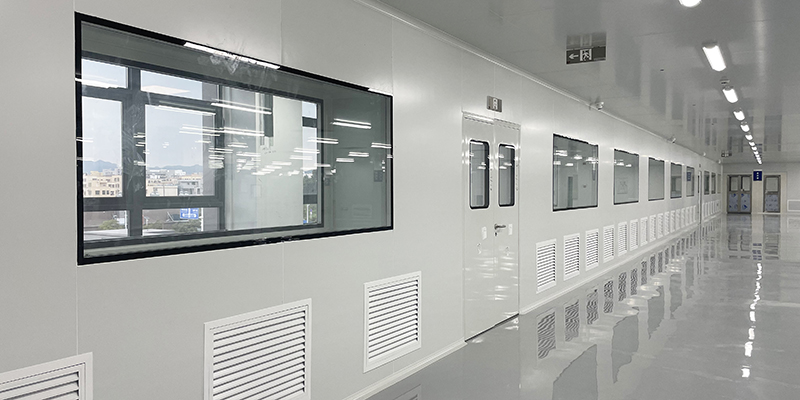
Class in context: what the room needs
- Theatres and clean zones run small differentials - historically around 5 Pa in DIN 1946-4 practice, cascades in HTM 03-01 logic - but run them constantly, so leakage accumulates into HVAC energy and lost cascade all day.
- Cleanrooms hold 10-15 Pa between grades; here the class of the boundary doors is qualification material, checked against ISO 14644 monitoring.
- Isolation rooms sit below corridor pressure; the door's leakage is the difference between -12 Pa sustained and -12 Pa theoretical.
None of these rooms need exotic pressure resistance - they need low leakage sustained by seals that still compress after years of trolleys. The class is the door keeping that promise in numbers.
Three traps in reading reports
- Configuration mismatch: the class was earned by a 900 mm single leaf; you are buying a 2,000 mm double slider. Leakage grows with joint length - ask for evidence at your configuration.
- Lab-only truth: site installation, wall junctions and thresholds decide the leakage you actually get. Field differential checks close this gap.
- Class without maintenance story: seals age and wear. A supplier who can quote seal life and replacement intervals understands what the class costs to keep.
How to ask for it in one sentence
"Please state the EN 12207 class and leakage figures for this configuration, and confirm support for field verification at commissioning." Suppliers with real data answer that sentence with a document; the others answer it with adjectives.
The classes, mapped to rooms that buy them
- Top classes at stepped pressures: theatre boundaries, isolation suites, cleanroom grades - the doors HVAC leans on.
- Upper-middle classes: treatment rooms, pharmacy zones, high-traffic clinical boundaries - sealing with margin.
- Middle classes: general ward corridors where draught and energy matter more than cascades.
- Anything breathless in the report: doors for rooms nobody measures - acceptable for storage, fatal for anything with a pressure regime.
Writing class requirements that procurement can enforce
Adjectives die in procurement; numbers survive it. The pattern: "Doorsets on pressure boundaries shall achieve EN 12207 class [X] at [Y] Pa for the quoted configuration, evidenced by test report; field verification supported at commissioning." One sentence, four enforcement hooks - configuration match, evidence, class, and field check - and a quotation comparison that runs on facts.
FAQ
What is EN 12207?
The European standard classifying windows and doors by air permeability - leakage through the closed assembly at stepped test pressures, per joint meter or per area, from Class 0 (unclassified) to Class 4. It is the vocabulary behind every serious "airtight" claim.
Which airtightness class should a hospital door have?
Pressure-cascade boundaries (theatres, isolation, cleanrooms) belong in the top classes at clinically relevant pressures; general wards live comfortably lower. The room's ventilation role, not the brochure's ambition, sets the target.
Does class drop over time?
Performance follows the seals: worn gaskets and dirty thresholds move real leakage away from the lab figure. Quarterly seal rounds and annual measurements keep the class the door was sold with.
Is class the same for every size of door?
No - leakage grows with joint length and configuration. Evidence for your actual leaf count and width, not the lab's lucky single-leaf sample, is what the report must show.
How do I compare two doors' airtightness?
Same pressure steps, same configuration basis, same unit - per joint meter or per area. Anything else is two poems in different languages.
How is EN 12207 different from EN 12207 field testing?
Laboratory testing certifies the door type under controlled conditions with stated pressure steps; field verification measures the installed door in its real frame and wall. The certificate earns the claim, the field check keeps it honest - serious projects budget for both.
What pressure steps matter for hospital doors?
Clinical cascades live in single-digit-to-tens of pascals, so performance at the lower steps is what daily operation actually uses - but evidence across the full stepped range tells you where the seal gives up under abnormal conditions, like wind pressure on an external wall.
One number the whole cascade hangs on
Cascade design spends its margins quickly: every leaky boundary taxes the HVAC, every propped door spends a step of the ladder. The departments that hold their classes for years are the ones that treat one number - the differential across the tightest door - as a daily vital sign, monitored and trended like any other. Measurement is cheaper than capacity; both are cheaper than failure.
Does airtightness affect energy use in hospitals?
On pressure-cascade buildings, continuously: heated and filtered air lost through boundaries is paid for at the plant, around the clock. Sealing is an HVAC efficiency measure that happens to be a door specification.
Can I upgrade a door's class without replacing it?
Sometimes - new gaskets, adjusted compression and a cleaned threshold recover most of a tired door's performance. The measurement before and after tells you whether you upgraded a door or polished a memory.
How do I trend door leakage over time?
Annual field readings into the same logbook sheet - a drift chart turns maintenance from ritual into information. The door that tells you its story gets better care than the one that keeps quiet.
Does humidity affect airtightness tests?
Measurements correct for conditions per the method; the practical rule is consistency - same regime, same gauges, same season where possible. Trends forgive small absolutes and punish changed methods.
Class is a number; discipline keeps it true. The logbook is the door's medical record.