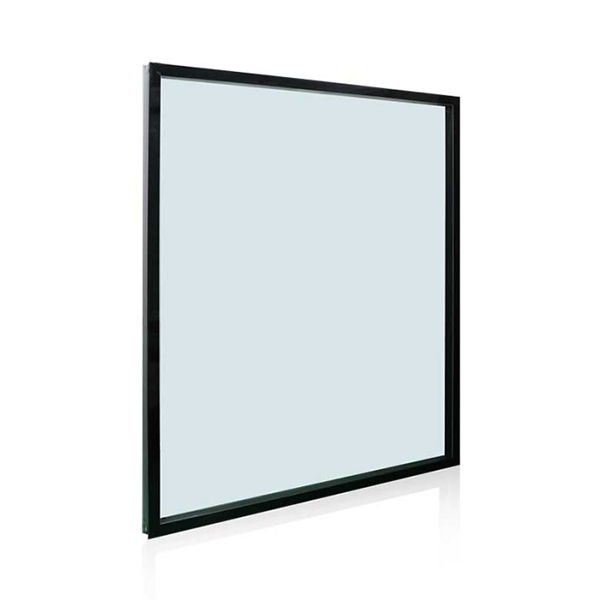
Cleanroom windows: flush-mount double-glazed tempered glass units direct-glazed into 50/75/100mm cleanroom panels for pharma, labs and electronics.
Cleanroom Window Types
Selecting the right cleanroom window starts with the wall system it sits in and the cleanliness class the room operates at. Four types cover the full range.
Flush-Mount Cleanroom Viewing Windows
The most common configuration: a double-glazed unit mounted flush with both faces of the cleanroom wall panel. No recess, no ledge, no projecting frame — the glass surface is level with the wall, so there is no particle trap and cleaning is a single wipe across the entire surface. Direct-glazed into 50mm, 75mm or 100mm EPS, MgO or rock wool sandwich panels during panel manufacture, creating a single factory-finished wall-and-window assembly.
Double-Glazed Insulated Units
Two panes of toughened glass separated by a sealed air or argon cavity, providing thermal insulation and sound reduction between rooms. The cavity is sealed with a molecular sieve desiccant to prevent fogging in humidity-controlled environments. Standard cavity: 6mm or 12mm air gap; custom widths available. Double glazing is specified for exterior walls, rooms with temperature differentials, and areas where sound transmission between clean zones must be controlled.
Single-Glazed Panels for Walls & Doors
Single 6mm or 8mm toughened glass panels for interior partitions and cleanroom doors where thermal insulation is not required. Lighter and more affordable than double-glazed units. Used for vision panels in HPL-faced doors, internal windows between rooms of the same cleanliness class, and viewing panels in airlocks and material transfer chambers.
Sliding & Openable Cleanroom Windows
Openable windows for pass-through hatches and material transfer between rooms of different cleanliness classes. Sliding sash windows with a sealed track allow material transfer without breaching the pressure cascade. Optional interlock prevents both panels opening simultaneously. Each sash runs on a sealed roller track with a compressible gasket that maintains air tightness when closed.
What Makes a Window Suitable for a Cleanroom
A clean room window is not just a window with a smooth frame. Three properties are non-negotiable.
First, flush surfaces. The window must sit level with the wall panel on both sides — any recess or projecting frame creates a particle trap that is impossible to clean during wipe-down protocols. Our flush-mount units are direct-glazed into the panel during manufacture, so the glass and panel arrive as one component with no on-site joints.
Second, non-outgassing materials. Glass, anodised aluminum spacers and medical-grade silicone sealants do not release volatile organic compounds (VOCs) into the clean zone. This is critical for ISO Class 5-6 semiconductor and pharma cleanrooms where molecular contamination can destroy product yields.
Third, seal integrity. The window-to-panel joint must maintain the room's pressure differential without leakage. Our glazing method uses a continuous silicone bead around the glass perimeter, backed by an aluminum glazing bead that is mechanically fixed to the panel — no adhesive-only joints that could fail over time.
Cleanroom Window Specifications
Glass Type & Thickness
Standard: 5mm or 6mm toughened (tempered) safety glass per pane for double-glazed units; 8mm for single-glazed panels. All glass is CE marked to EN 12150 and, where required by the project, EN 12600 (impact resistance classification 1B1). Laminated glass (6+6mm with clear PVB interlayer) is available for enhanced safety or sound reduction — the interlayer holds fragments if the glass breaks.
Panel Thickness & Glazing Method
Windows are direct-glazed into the wall panel during manufacture, matching the panel thickness exactly: 50mm panels (standard cleanroom, most common), 75mm panels (higher insulation or fire requirements), 100mm panels (walk-on ceilings, high-load walls, or maximum thermal performance). The glass unit sits within the panel core, sealed to both face sheets, with an anodised aluminum glazing bead on each side.
Seals, Gaskets & Flush Frames
Glazing seals: medical-grade silicone (standard) or EPDM (for chemical resistance). The sealant is applied in a continuous bead around the glass perimeter — no gaps, no discontinuity. Aluminum glazing beads are flush-mounted and secured with tamper-proof screws. The entire window-frame-panel assembly is tested to EN 12207 for air leakage and ships with a test certificate.
Cleanroom Windows by Industry
Pharmaceutical & Biotech Plants
GMP cleanrooms for sterile manufacturing, filling lines and quality control laboratories. Windows are specified for visual monitoring of production areas without personnel entry — critical for Grade A/B zones where every entry carries contamination risk. Double-glazed units with flush mounting are standard. Surfaces must withstand hydrogen peroxide vapor (HPV) decontamination.
Laboratories & Research Facilities
University cleanrooms, government research facilities and private R&D laboratories. Windows between rooms of different cleanliness classes allow researchers to monitor equipment and experiments from lower-class areas. An isolation window between a fume hood and the preparation room provides visual communication while maintaining the containment barrier.
Hospitals & Isolation Rooms
Pharmacy compounding cleanrooms (USP 797/800), CSSD sterile corridors and isolation room windows. Hospital cleanroom windows must be wipeable with hospital disinfectants and, in isolation rooms, may need to integrate with the negative-pressure door and HVAC system. Vision panels in isolation room doors allow nursing staff to observe patients without opening the door.
Electronics & Semiconductor
ISO Class 5-7 cleanrooms for PCB assembly, semiconductor packaging and precision optics. Windows must be non-outgassing and may need electrostatic dissipative (ESD) coating for sensitive component areas. Flush-mounted double-glazed units minimize particle generation and maintain the pressure cascade between process and support zones.
Food & Beverage Processing
HACCP-compliant food processing cleanrooms where windows allow quality inspection without breaching the hygiene barrier. Stainless steel glazing beads and food-safe silicone seals withstand daily high-pressure washdown. Sliding pass-through windows connect preparation and packaging areas.
Observation Windows & Interior Vision Panels
Beyond the cleanroom wall itself, we supply interior observation windows for corridors, monitoring rooms and quality control stations. An internal window between a process room and an observation corridor lets supervisors check operations without entering the controlled zone. Vision panels integrated into cleanroom doors provide the same function for individual rooms.
For radiology-adjacent cleanrooms, lead glass observation windows provide radiation shielding with optical clarity — the same lead equivalence as the wall, in a window that functions identically to a standard cleanroom unit.
Windows for Cleanroom Partitions & Doors
Cleanroom partition systems use the same panel-and-window construction as the walls themselves. We supply windows for all partition types: solid partition walls, glazed partition walls (where the entire partition is glass between anodised aluminum posts), and cleanroom doors with integral vision panels. Because the windows, partitions and doors come from the same factory, the glazing method, seal materials and finish colors match across the entire envelope — no mismatched components at the construction site.
Cleanroom Classification & ISO 14644 Explained
ISO 14644-1 classifies cleanrooms by particle concentration: Class 5 permits 3,520 particles ≥0.5μm per m³; Class 7, 352,000; Class 8, 3,520,000. The window's role is to maintain the room's classification by providing a flush, sealed, non-shedding surface that does not compromise the HVAC system's ability to hold the required pressure differential. See our cleanroom door range for the complete envelope solution.
Cleanroom Window vs Standard Window
A standard commercial window has a projecting frame, drainage channels, opening sashes with weather seals and a thermal break — none of which are suitable for a cleanroom. A cleanroom window is flush-mounted on both sides, permanently sealed (no drainage or ventilation paths), non-outgassing and tested for air leakage. The difference is not just the frame profile: it is the entire design philosophy, from glazing method to sealant chemistry to testing protocol.
Cleanroom Window Price & Ordering
Pricing depends on window size, glass type (single vs double-glazed), panel thickness compatibility and quantity. Standard sizes (600×800mm, 800×1000mm) are the most economical; custom sizes to your architectural drawings are made to order. Send your panel specification and window schedule for item-by-item pricing. Standard production 20-35 days. Get a quote.
Installation, Cleaning & Maintenance
Flush-mount windows arrive pre-glazed in the wall panel — installation is the same as installing a standard panel, with the window already sealed and tested. For retrofit installations into existing panels, we supply a kit with glazing beads, silicone and an aluminum sub-frame that converts a panel cutout into a flush window opening.
Cleaning: wipe with the same disinfectant used for the wall panels. No special cleaners needed. Avoid abrasive pads that could scratch the glass. Inspect silicone seals annually for discoloration or loss of elasticity; replacement is a simple re-bead operation without removing the glass.
For rooms that also need pressure control, our
hermetic cleanroom doors cover the door side of the same envelope.