
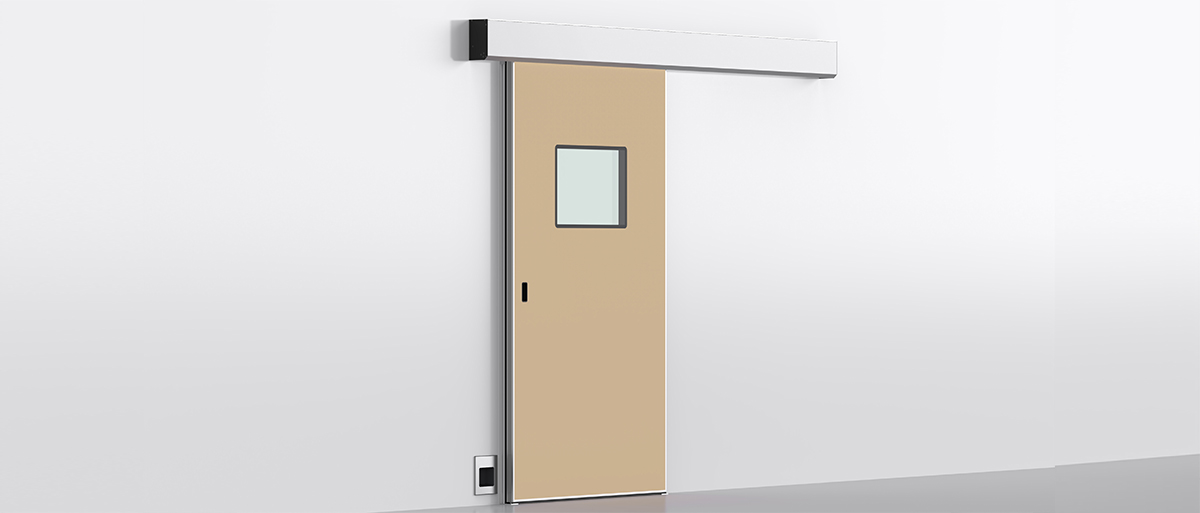
Airtight Automatic Sliding Door for Operating Rooms & Cleanrooms
MODEL NO.: FHD-202
Custom airtight automatic door to GMP design and safety requirements for operating rooms and ward areas - brushless DC motor, sealing gasket around the leaf.
Airtight hermetic sliding doors for operating rooms, isolation suites and clean corridors: sealed rails, brushless operators and optional lead lining.
MODEL NO.: FHD-202
Custom airtight automatic door to GMP design and safety requirements for operating rooms and ward areas - brushless DC motor, sealing gasket around the leaf.
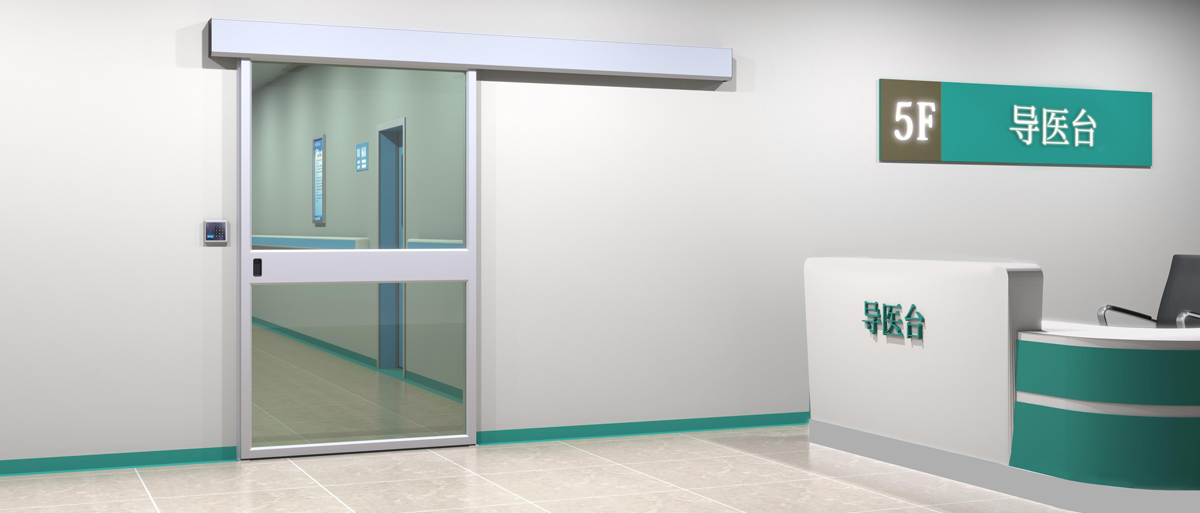
MODEL NO.: FHD-203
Fashionable airtight automatic door with tempered glass leaf - transparent appearance, simple shape, smooth operation with good air tightness.
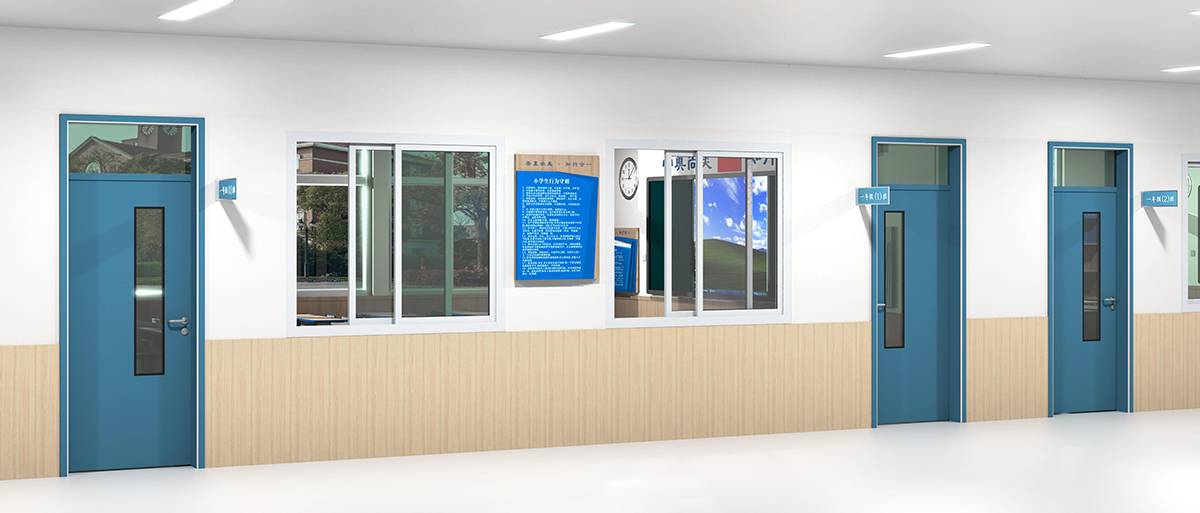
MODEL NO.: FHD-204
Air-tight swing door for hospitals and public places - arc transition structure, anti-collision, no dust accumulation, easy to clean.
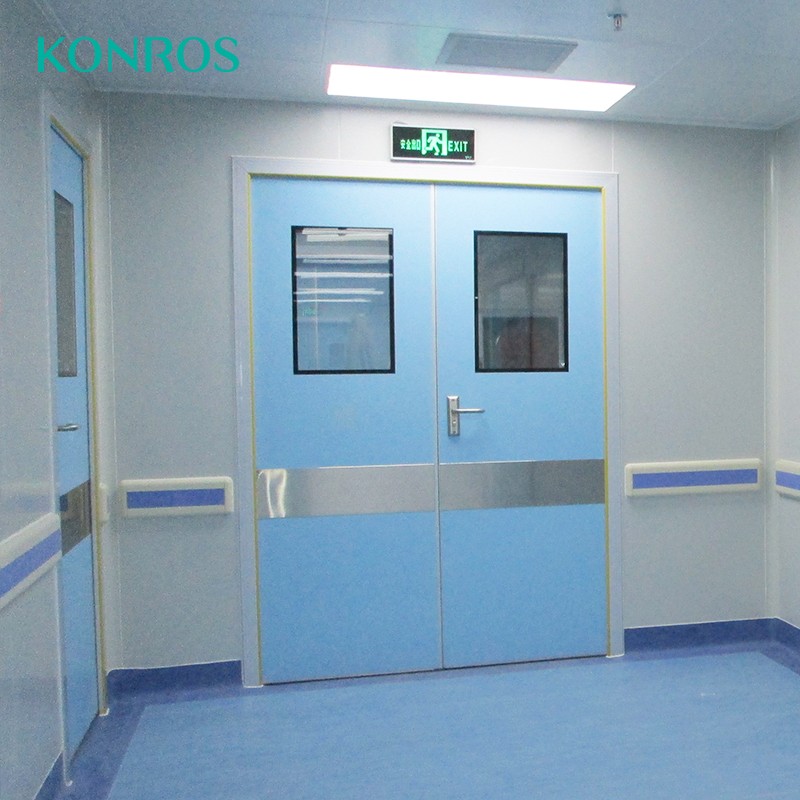
MODEL NO.: FHD-303
Operating theatre door for medical facilities: airtight steel construction, touchless activation, optional vision panel - custom built to the theatre suite.
A hermetic door is a door that seals. Not just closes — seals. When the leaf shuts, it compresses against a continuous gasket running around the entire frame perimeter, creating an airtight barrier that maintains the room's pressure differential. In healthcare and laboratory settings, this pressure control is not cosmetic: operating theatres run positive pressure to keep contaminated air out; isolation suites run negative pressure to keep infectious agents in; cleanrooms cascade pressure between ISO classes to direct particle flow.
The terms hermetic door, airtight door, and air tight door (written separately) refer to the same product category. British and European manufacturers tend to use "hermetic" (from the Greek god Hermes, meaning sealed); American specifications more commonly use "airtight" or "air-tight." The sealing principle is identical: a compressible gasket, a rigid frame, and a mechanism that applies consistent closing force.
Hermetic doors come in three operating formats. Each seals the same way; the difference is how the leaf moves.
The default choice for operating theatres, ICU main entrances and cleanroom corridors. The leaf slides horizontally on a sealed overhead track — the track mechanism sits outside the clean zone, so no particles or contaminants enter from the operating hardware. Brushless DC motors drive the leaf smoothly; radar, infrared or foot-sensor activation opens the door without touch. When the leaf reaches the closed position, it drops against the floor seal and compresses the perimeter gasket simultaneously, achieving full sealing in one motion. This is the format most hospital projects specify for areas where hands-free operation and maximum seal integrity are both required.
Hinged doors with perimeter compression seals for rooms where a sliding door is impractical: tight corridors, corners, or rooms with limited wall space on either side of the opening. Single-leaf hermetic swing doors suit standard operating rooms, isolation patient rooms and preparation areas. Double-leaf configurations (both leaves active, or one fixed with flush bolt) serve trauma suites and main theatre corridors where bed and equipment passage demands full-width opening. Hydraulic closers ensure the leaf compresses the gasket fully on every close, regardless of who last pushed the door.
Hermetic sliding or swing doors with lead sheet bonded into the leaf core, for operating theatres equipped with intraoperative imaging (C-arm, O-arm) or hybrid ORs adjacent to radiology suites. The door provides both airtight sealing for theatre pressure control and radiation shielding for imaging scatter — two safety functions in one door. Lead equivalence is specified by the physicist. See our radiation-shielded door range.
Operating theatres maintain positive pressure (typically 15-25Pa above the corridor) to prevent airborne contaminants from entering during surgery. The hermetic door at the theatre entrance is a critical component: if it leaks, the HVAC system cannot hold the pressure differential, and the theatre's clean air certification is at risk.
Our hermetic sliding doors for theatres close against a machined frame with a continuous silicone gasket channel. The overhead track is completely enclosed and lubrication-free. Optional features include: touchless foot-switch activation for scrubbed staff, safety sensors that reverse the leaf on obstruction, and interlock control that prevents simultaneous opening of the theatre door and the adjacent scrub-room door. See our operating room door solution.
ICU isolation rooms and negative-pressure wards run at 2.5-10Pa below the corridor to contain airborne pathogens. The hermetic door must maintain this negative differential while allowing frequent staff entry — often 50+ openings per day. Our ICU doors use quiet-mode operators (adjustable speed and dwell time) to reduce noise during night rounds, and optional anteroom interlock systems that create a two-door buffer between the isolation room and the corridor.
Vision panels in tempered or laminated glass allow nursing staff to observe patients without opening the door. For airborne-infection isolation rooms (AIIR), we supply doors with the viewing window frame sealed to the same airtightness standard as the door perimeter.
Research and clinical laboratories use hermetic doors to control chemical fumes, maintain biosafety containment levels, and separate incompatible work zones. BSL-2 and BSL-3 laboratories require door interlock systems with self-closing hermetic doors at every containment boundary. Chemical laboratories need door surfaces that resist solvents and corrosive vapors — stainless steel or epoxy-coated faces are standard.
For laboratories with fume hood exhaust systems, the hermetic door's airtightness directly affects the HVAC balance. A leaky door can cause a fume hood to lose containment by disrupting the room's negative pressure. Our doors are tested to EN 12207 and shipped with leakage documentation that your HVAC engineer can use in the commissioning report.
Cleanroom hermetic doors maintain the pressure cascade between ISO 14644 cleanliness classes — typically 10-20Pa from Class 5 through Class 8. The door surface must be non-shedding and compatible with the facility's cleaning protocol. For pharmaceutical GMP cleanrooms, we supply doors with stainless steel or HPL faces, coved transitions to the wall panel system, and documentation supporting cleanroom certification. See our cleanroom door range for detailed specifications.
Hermetic doors are classified by their air leakage rate under pressure differential, tested to EN 12207 (European) or equivalent national standards. Class 4 is the highest sealing grade — the door effectively does not leak at the specified test pressure. Our hermetic sliding doors achieve Class 4 with compression seals on all four sides; swing doors with perimeter gaskets typically achieve Class 2-3.
Fire-rated hermetic doors combine airtight sealing with fire resistance: EI30 or EI60 to EN 1634-1, using mineral core door leaves. This dual performance is required in hospitals where fire compartment walls intersect with pressure-controlled zones. Read our guide to airtightness classes.
Standard leaf: 50mm thick, steel or aluminum frame structure, HPL or powder-coated face, stainless steel for wet or pharma areas. Lead-lined variants add 1-3mm Pb equivalence. Frame: aluminum extrusion with integrated gasket channel, or steel box section for fire-rated assemblies. Surface colors matched to hospital or laboratory interior schedules; RAL references for powder coating.
Sliding door tracks: sealed overhead aluminum rail, permanently lubricated, zero maintenance. Perimeter seals: medical-grade silicone (standard) or EPDM (for chemical resistance). Floor seal: motor-driven drop-down mechanism that engages when the door closes. Gaskets are replaceable without removing the door leaf — expected service life 3-5 years depending on traffic.
Brushless DC operators with variable speed and dwell. Activation options: radar motion sensor (default), infrared presence sensor, foot switch (for scrubbed staff), elbow push-plate, or card reader for access-controlled areas. Interlock controllers manage two-door airlock sequences with configurable delay and pressure-equalization timing. Battery backup opens the door on power failure.
Every door ships with: factory air leakage test report (EN 12207 class), cycle test record (minimum 100,000 open-close cycles), and dimensional inspection certificate. Fire-rated doors include EN 1634-1 test evidence. Lead-lined doors include radiation attenuation report to IEC 61331-1. These documents support your commissioning and regulatory compliance.
Hermetic door and airtight door mean the same thing — full perimeter sealing with tested leakage rates. Standard commercial doors (even "sealed" ones) do not have compression gaskets, tested leakage classes, or pressure-differential capability. If your specification requires maintaining a pressure differential (positive or negative), you need a hermetic/airtight door, not a standard door with a brush strip. Read our detailed comparison.
Hermetic door pricing depends on: leaf size, single vs double, sliding vs swing, lead lining, fire rating, operator class, activation sensors, and interlock requirements. A single-leaf automatic sliding hermetic door for a standard operating theatre is the most common configuration; double-leaf lead-lined fire-rated doors for hybrid ORs are at the top of the range. Send your door schedule for item-by-item pricing within 48 hours. Standard production 20-35 days. Get a quote.
Hermetic doors ship with installation drawings showing frame positioning, gasket alignment and floor-seal engagement depth. For sliding doors, the overhead track must be level within ±1mm across the full opening width — we provide a laser alignment target with each order. For swing doors, the frame must be plumbed so the leaf compresses the gasket uniformly.
Routine maintenance: inspect gaskets quarterly for wear or compression set; replace floor drop-seals every 3-5 years depending on traffic; check operator speed and safety sensor response monthly. Our maintenance checklist covers the full annual schedule. Spare parts — seals, rollers, sensors — ship worldwide within days.
They are the same product. British and European manufacturers typically use "hermetic door"; American specifications more often use "airtight door" or "air-tight door." The sealing principle — perimeter compression gasket with tested leakage rate — is identical.
Yes. Single-leaf for standard operating rooms and isolation patient rooms; double-leaf for trauma suites, hybrid ORs and main theatre corridors where full-width opening is needed for beds and equipment.
Yes. Lead sheet is bonded into the hermetic leaf core, providing both airtight sealing and radiation shielding. Pb equivalence is built to the value specified in your shielding report.
Our hermetic sliding doors achieve EN 12207 Class 4 (the highest). Swing doors with perimeter gaskets achieve Class 2-3. Every door ships with a factory air leakage test report documenting the achieved class.
Expected service life is 3-5 years depending on traffic frequency. Gaskets are replaceable without removing the door leaf; spare seals ship worldwide within days.
Get the latest price? We will reply as soon as possible (within 12 hours)