
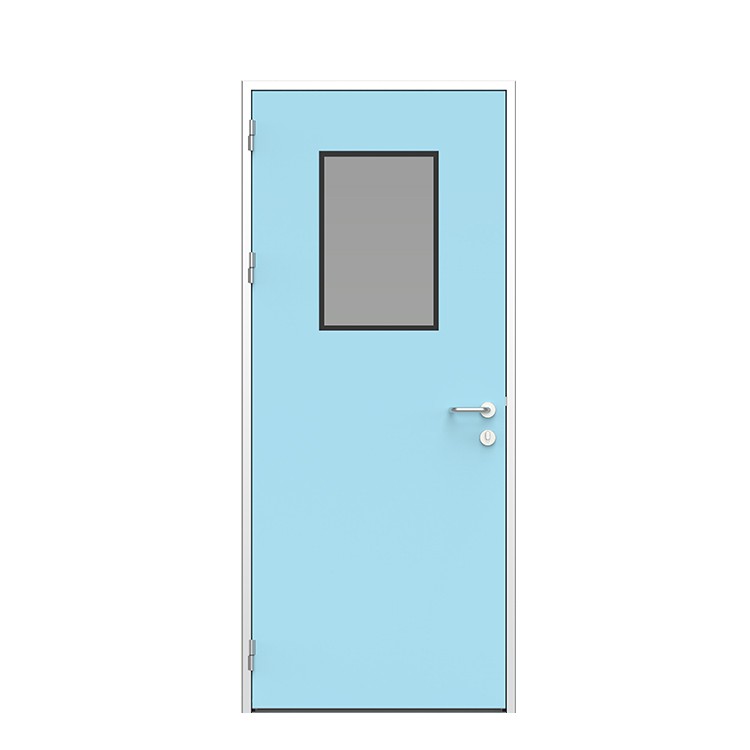
Lead Lined Door for CT Scan Rooms
MODEL NO.: FHD-103
Hospital radiology protection lead door with or without lead glass window for CT scan rooms - HPL finished, antibacterial, custom sizes.
Operating room door applications: when to use radar, foot sensor, card or face-recognition entry, glass OR doors, lead-lined doors - plus sealing, sizes and testing.
Three jobs, in this order: hold the pressure cascade when closed, move people and beds through quickly without dragging corridor air along, and survive disinfectant and hundreds of cycles a day. Traffic studies in working theatres count a door opening roughly once every one to two minutes during surgery, so the door is where the ventilation design is won or lost.
Below is how we configure these doors in real projects - by opening method, by glass, by shielding, then sealing, size and acceptance.
A motion radar on each side opens the leaf as staff approach, and a presence sensor in the safety field keeps it open while anything is in the threshold. This is the workhorse combination for the theatre-to-corridor door: no touching, no waiting, full-width passage for beds.
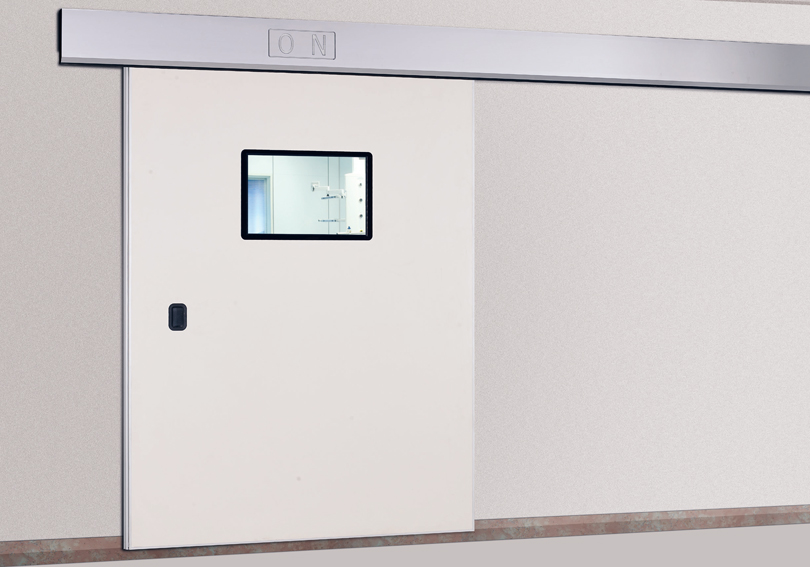
Once scrubbed, nobody touches a surface. A foot-operated switch or a low kick sensor at the bottom rail lets a surgeon or scrub nurse open the door with a foot while both hands stay sterile. In many theatres the main door runs radar plus foot control in parallel - radar for trolleys, foot for the sterile team.
A short-range sensor that opens on a deliberate hand wave, not on general movement. Useful on doors where radar would trigger on every passer-by: drug rooms, equipment stores, sliding doors off a busy corridor.
For restricted rooms the door needs to decide who comes in: card or keypad on the outer side, free-exit or radar inside. Typical uses in an operating department include the implant and drug store, the sterile store, and theatres that must stay locked after hours. The reader mounts beside the frame; the operator logs the event.
Where the hospital wants contactless plus an audit trail - who entered, when - face terminals replace the card. They suit high-security zones such as hybrid theatres with expensive imaging equipment. In practice we see them combined with radar exit so that leaving is always free-flowing.
Every automatic door in this list must fail safe: battery or UPS to drive it open on power loss, and a mechanical escape release so the leaf can always be pushed. In trauma and hybrid rooms the sliding leaf gets a breakout function - it releases from the track and swings like a swing door for emergency egress.
Glass earns its place in an operating department for line of sight. A full-height glazed leaf or a large vision panel lets circulation staff see the field without opening the door - which matters more than most specs admit, because every opening is a pressure event. Common placements:
The limits of glass are sealing and shielding. A frameless all-glass door will not reach the leakage class of a compressed hermetic leaf, so on the pressure-critical boundary we specify our glass hermetic doors - glazed leaf, hermetic frame and seals - rather than architectural glass sliders.
A theatre that hosts a mobile C-arm, or a hybrid room with fixed imaging, needs radiation shielding at the door. The leaf gets lead lining, the vision panel gets leaded glazing, and - the detail that gets missed - the frame gets lined too, or radiation simply goes around the door. Typical diagnostic rooms work at 1-2 mm Pb equivalence; the number comes from the room physicist's shielding calculation for the actual equipment, never from a door supplier's default. Adjacent doors on a shared wall, like the anaesthetic room door, may also fall inside the shielding contour.
The ventilation standard sets the pressure the door must help hold: DIN 1946-4 historically placed the operating suite around 5 Pa above adjacent rooms (the 2008 revision relaxed the stated minimum), and the UK's HTM 03-01 works with a nominal cascade across theatre, anaesthetic room and corridor. The door does not create that pressure - it preserves it. A true hermetic leaf compresses onto seals on all four sides when it closes; anything less leaks.
Two measured studies underpin the sliding-vs-swing choice. Kalliomaki et al. (2015) tested single hinged and sliding doors in a ventilated hospital room and found the sliding door exchanged less air in every scenario. Sadrizadeh et al. (2018) traced particle dispersion into an operating room during door cycles and identified the door movement itself as a key contamination factor. Both are listed with sources below.
On site, performance is proven by air permeability testing to EN 12207 with a recorded leakage figure, plus a differential-pressure check across the finished door once the HVAC is balanced.
Size to the widest object that will cross the door - hybrid tables, C-arms, microscopes - and check wall thickness early, because a hermetic frame needs a prepared pocket and head-track support.
HPL or stainless faces, radiused corners, no exposed fasteners, vision panels sealed into the leaf. Handles, where they exist at all, should be stainless; sensor operation removes the need for most of them.
MODEL NO.: FHD-103
Hospital radiology protection lead door with or without lead glass window for CT scan rooms - HPL finished, antibacterial, custom sizes.
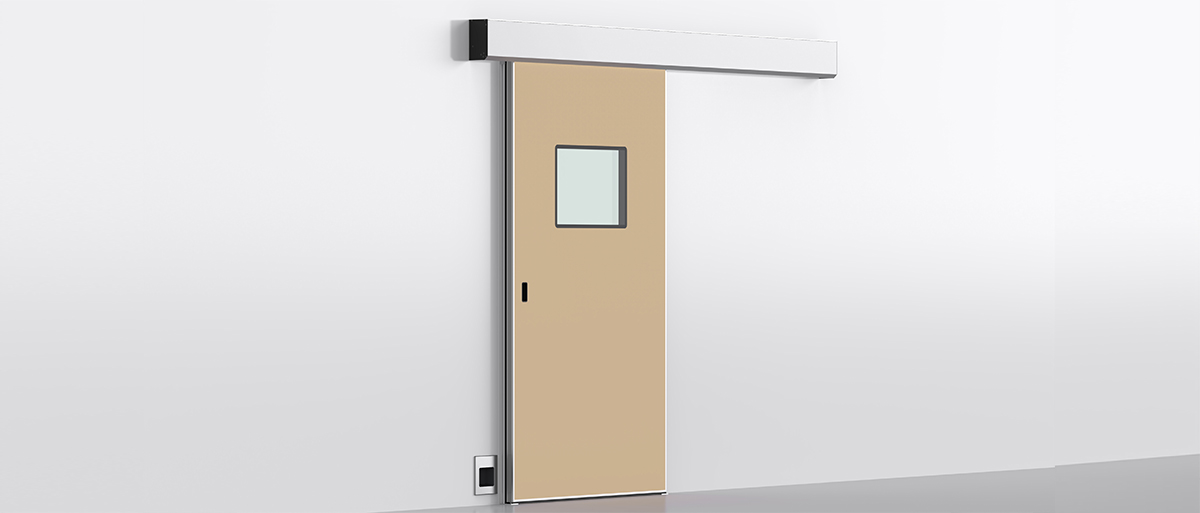
MODEL NO.: FHD-202
Custom airtight automatic door to GMP design and safety requirements for operating rooms and ward areas - brushless DC motor, sealing gasket around the leaf.
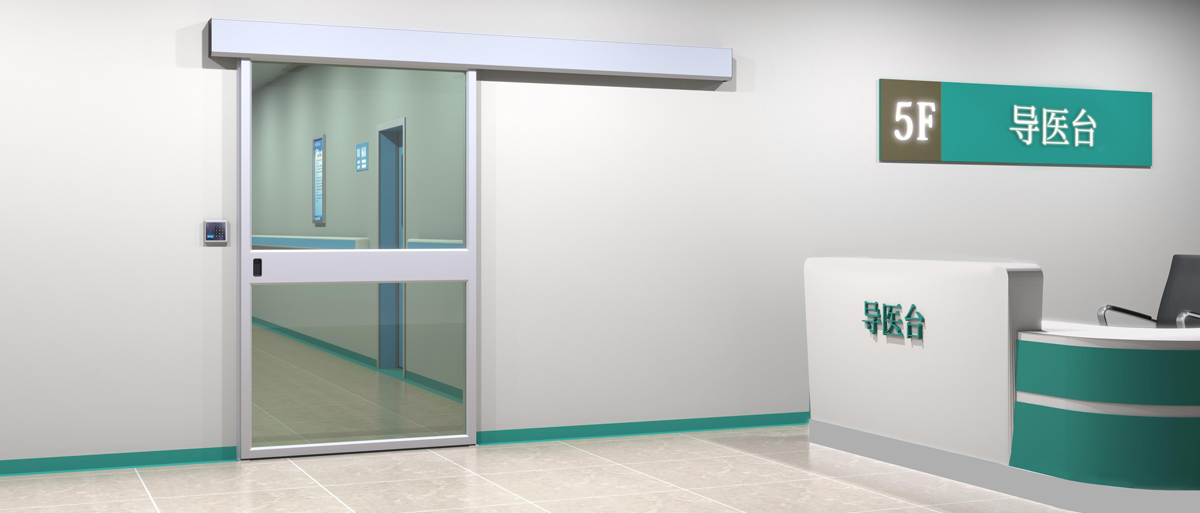
MODEL NO.: FHD-203
Fashionable airtight automatic door with tempered glass leaf - transparent appearance, simple shape, smooth operation with good air tightness.
Get the latest price? We will reply as soon as possible (within 12 hours)