
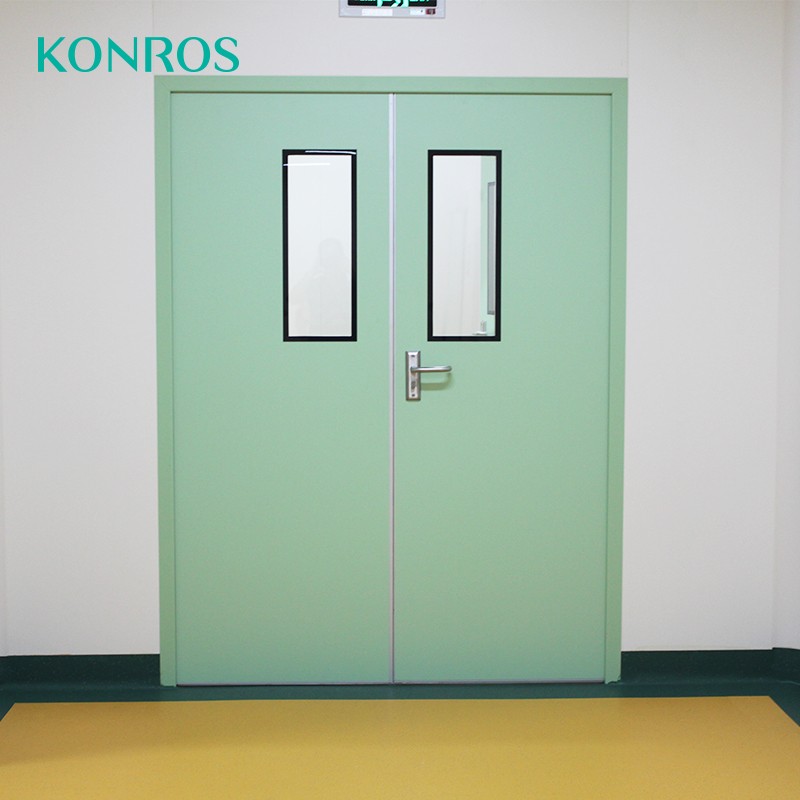
HPL Flush Hospital Door, Same-Color Aluminum Frame
MODEL NO.: FHD-105
Flush hospital door with HPL laminate leaf and matching same-color aluminium frame - clean monochrome look, easy to clean, antibacterial.
HPL-faced swing doors for hospital wards, corridors and clinics: antibacterial laminate surfaces, impact-resistant cores, optional vision panels and fire-rated assemblies.
MODEL NO.: FHD-105
Flush hospital door with HPL laminate leaf and matching same-color aluminium frame - clean monochrome look, easy to clean, antibacterial.
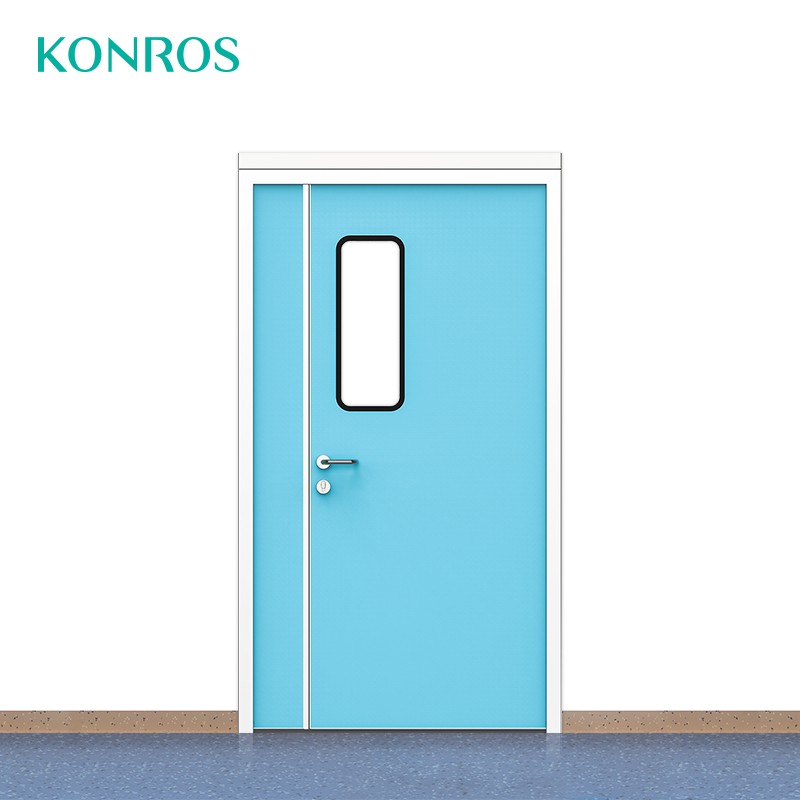
MODEL NO.: FHD-106
Antibacterial HPL flush laminate door for hospitals and laboratories - easy-to-clean surface, Formica® panels, customized dimensions.
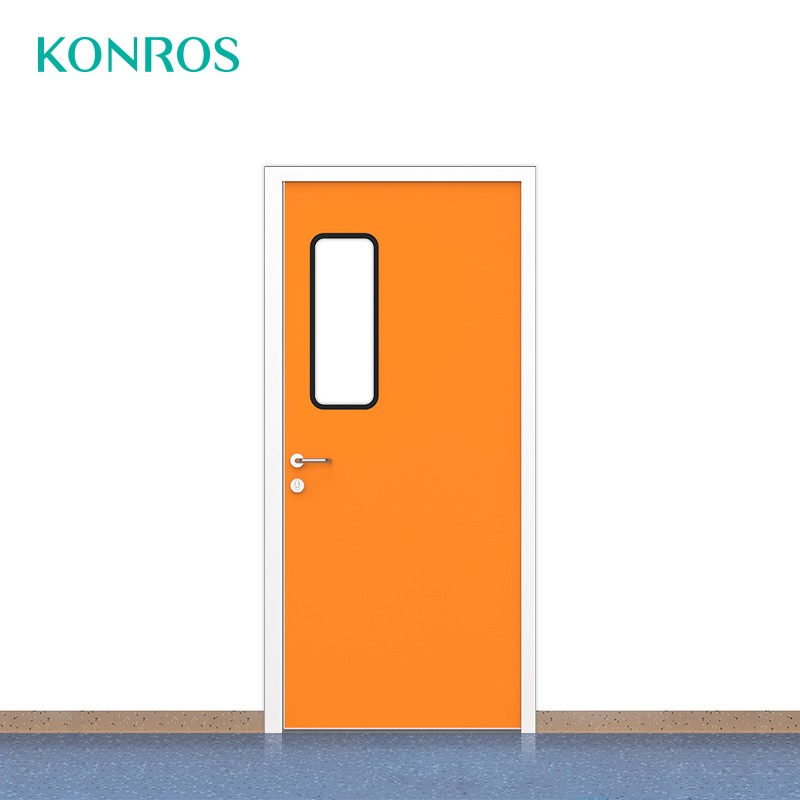
MODEL NO.: FHD-107
HPL panel flush door for hospital interiors - flat clean faces, antibacterial laminate, color customized, Formica® panels.
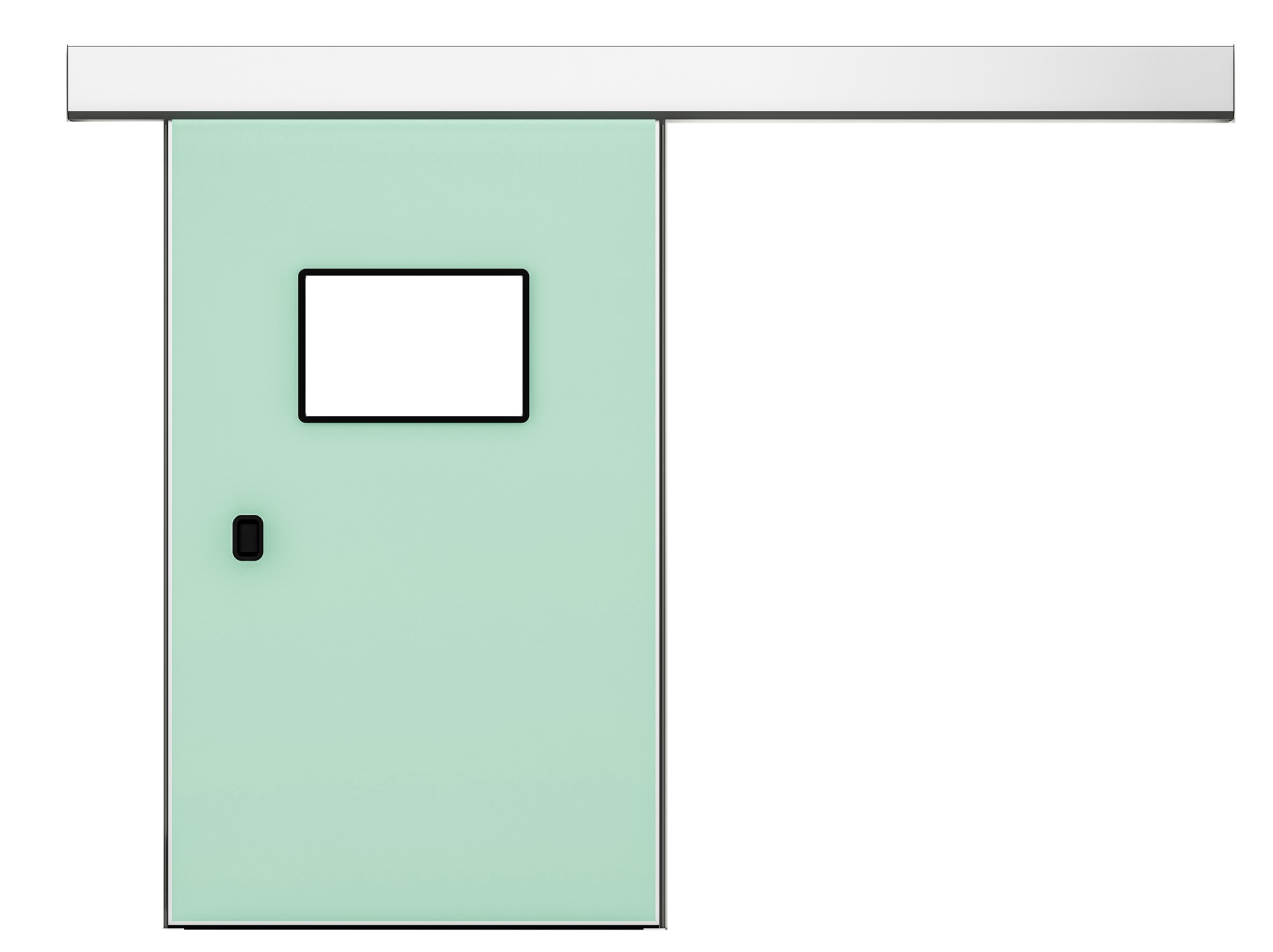
MODEL NO.: FHD-201
HPL automatic hermetic door for hospital patient rooms, CCU and ICU - fulfils all hygiene regulations, easy to clean, antibacterial, Formica® panels.
Our HPL door range covers the three formats most hospital projects order: HPL flush doors for wards — smooth, wipe-clean leaves with antibacterial laminate on both faces; HPL doors with vision panels — for staff visibility into patient rooms and isolation suites; and HPL double-leaf doors for corridors — wide openings for beds, trolleys and wheelchair traffic. Every leaf is made to your opening sizes and color schedule.
Standard single-leaf ward doors with HPL laminate both sides. The smooth face has no crevices for bacteria, wipes clean in seconds, and survives disinfectant chemicals that would strip paint. Available with matching aluminum or steel frames.
Patient room and isolation doors with tempered glass vision panels in 200×800mm or custom sizes. Panels let nursing staff observe patients without opening the door — critical for isolation rooms and pediatric wards. Lead glass available for radiology-adjacent rooms.
Wide-swing double doors for corridor intersections, storage rooms and equipment access. Both leaves operate independently; one leaf can be held open with a flush bolt during low-traffic periods, then released for full-width bed or trolley passage.
HPL (high-pressure laminate) is the default healthcare door finish across Europe and Asia for three reasons. First, it is inherently hygienic: the non-porous surface does not absorb moisture or harbor bacteria, and passes EN 1276 disinfectant resistance testing. Second, it is durable — 1.0-1.2mm HPL sheet bonded to the door core resists impact, scratches and the constant rubbing of bed rails and trolley handles. Third, it is economical: HPL doors cost significantly less than stainless steel while delivering the same cleanability for ward-level applications.
Door leaves are built around a structural core — honeycomb for standard ward doors, mineral core where fire rating is required, or solid-frame construction for lead-lined variants. The core is sandwiched between steel or aluminum stiles, then faced with HPL sheet under heat and pressure. Edges are sealed with matching PVC or aluminum profiles that stop water ingress and hide fixings.
Standard HPL faces come in woodgrain, solid colors and patterns from major laminate brands. Antibacterial treatment is applied to the laminate surface during manufacturing, providing continuous microbial reduction without coatings that wear off. The finish withstands alcohol, chlorine and quaternary ammonium disinfectants used in daily hospital cleaning protocols.
Standard leaf sizes: 900×2100mm (single ward), 1000×2100mm (accessible ward), 1200×2100mm (double-leaf corridor), custom to 2400mm high. Frames are available in powder-coated steel, anodized aluminum or HPL-wrapped — matching the leaf finish for a uniform look. Hardware positions (hinges, locks, closers, push plates) are pre-drilled to your schedule.
Single-leaf HPL doors with or without vision panels, fitted with hydraulic closers for controlled closing. Sound-reducing perimeter seals bring noise isolation to 25-30dB, helping patients sleep.
HPL doors with privacy vision panels (blinds or obscure glass) for doctor offices and examination rooms. Lockable lever handles on both sides; optional card-reader cutouts for access-controlled areas.
Reinforced HPL doors with impact-resistant edges and kick plates for corridors where bed and trolley traffic is constant. Closers rated to 500,000+ cycles keep the door controlled without slamming.
HPL vs powder-coated steel: HPL wins on aesthetics and color choice; steel wins on impact resistance for the most abusive areas. Many hospitals use HPL for wards and steel for service corridors. HPL vs stainless steel: stainless is specified for CSSD and pharma areas with aggressive cleaning agents; HPL is the economical choice everywhere else. HPL vs compact laminate: compact laminate (12mm solid) is heavier and more expensive but offers through-color edges; HPL on a lightweight core is sufficient for most ward applications.
HPL doors with mineral core achieve 30-minute fire resistance (EI30) to EN 1634-1. 60-minute ratings (EI60) are available with thicker cores and intumescent seals. Surface spread of flame meets Class B-s1,d0 to EN 13501. CE marking is available for projects requiring it. Antibacterial performance is tested to JIS Z 2801 / ISO 22196.
HPL ward doors are the most economical hospital door type in our range — pricing depends on size, core type (honeycomb vs fire-rated), vision panel configuration and quantity. Send your door schedule for item-by-item pricing. Standard production runs 20-35 days after drawing confirmation. Trial containers mixing several door types are welcome for distributor testing. Get a quote.
HPL (high-pressure laminate) is a durable, non-porous surface bonded to the door leaf. It resists bacteria, disinfectants and impact — the standard healthcare finish across Europe and Asia.
Yes. HPL doors with mineral core achieve 30-minute fire resistance (EI30) to EN 1634-1. 60-minute ratings are available with thicker cores.
Woodgrain, solid colors and patterns from major laminate brands. We match your hospital color schedule; RAL references for powder-coated frames.
Standard hospital disinfectants (alcohol, chlorine, quaternary ammonium) are all safe on HPL. Wipe with a damp cloth — no special maintenance required.
Get the latest price? We will reply as soon as possible (within 12 hours)