How Much Do Hermetic Doors Cost? Price Factors Explained
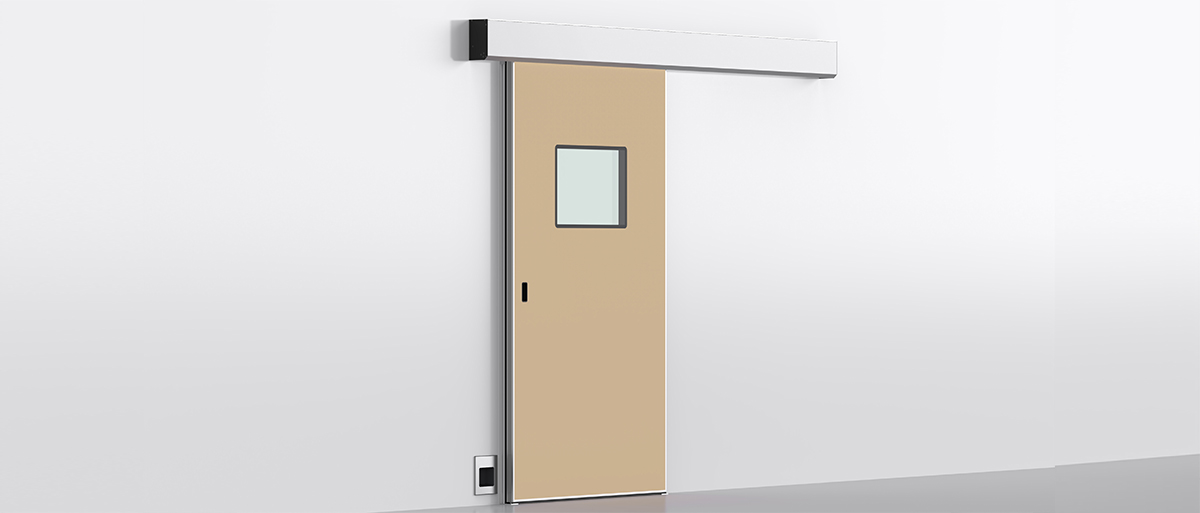
Buyers often ask for a price list for hermetic doors. There isn't one worth having - a factory-direct quotation is built per door set from a handful of recurring factors, and understanding them is how you compare quotes honestly and avoid paying for specification you don't need.
Factor 1: size and leaf count
Single-leaf openings up to about 1500 mm are the economy of the range. Double-leaf and extra-wide leaves need heavier rails, synchronized operators and stronger frames, and cost rises faster than the extra millimetres suggest. Before paying for width, check what actually has to pass through: many "we need 2000 mm" requirements are really 1600 mm requirements plus fear.
Factor 2: the operator and activation package
The motor is a big share of the door set price, and rightly so - it carries the cycle load for a decade. Radar on both faces plus presence sensing in the safety field is the standard package; foot control adds a little; card readers and interlocks add more because they bring control logic and wiring. Battery backup is priced in cycles of autonomy, not as a yes/no.
Factor 3: glazing and vision panels
A double-glazed sealed vision panel with anti-fog treatment is ordinary money. Leaded laminated glazing is not - leaded glass is priced per area and per equivalence, and a large window in a 2.0 mmPb door can rival the leaf in cost. If the room doesn't need a window, that money stays in your pocket.
Factor 4: lead lining and frame shielding
Lead lining is priced per area and per mmPb, and it applies to the leaf, the frame and the glazing as a set. It also cascades: weight goes up, so hinges or operators go up a class, and the rails get heavier. This is why a lead-lined slider quotes nothing like the plain slider next to it in the catalogue.
Factor 5: surfaces, certificates and testing
HPL or stainless faces are modest line items. Certified fire performance, EN 12207 leakage reports, EN 16005 operator compliance and third-party inspection all cost real money - and all of it is cheaper than replacing a door that fails commissioning. Decide which certificates the project actually requires before the quotation, not after.
Factor 6: logistics - the quiet budget killer
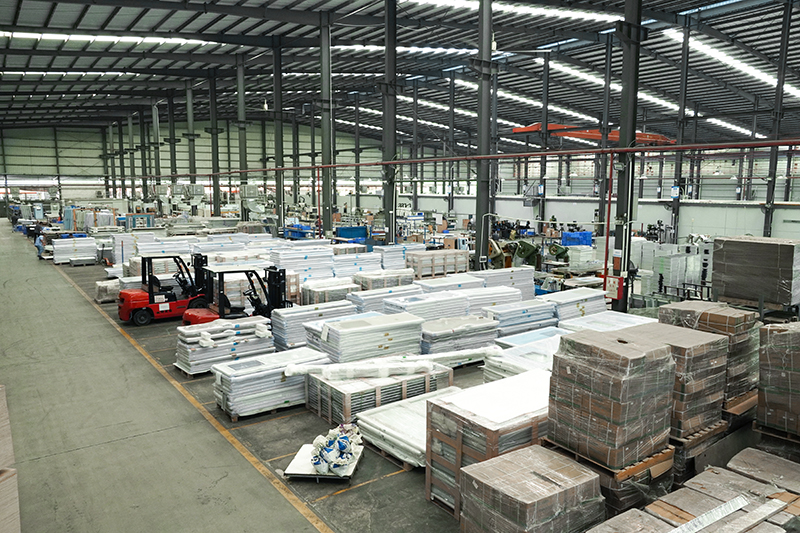
Door sets are bulky and heavy, and someone pays to move them: export packing, container volume, site delivery, unloading equipment. A quotation that looks 8% cheaper can lose the advantage in crating and freight. Compare quoted terms (EXW / FOB / CIF / DAP) with the same seriousness as the unit price.
What cheap quotations quietly omit
- Battery backup and its cycle count.
- Presence sensing in the safety field (radar alone is not a safety system).
- Frame shielding on lead-lined sets.
- Spare seals and rollers.
- Test reports - or the promise of them "later".
A practical way to compare quotations
Put every quote on one sheet with the same rows: leaf spec, operator class, activation package, glazing, shielding, certificates, packing terms. Gaps in a column tell you more than the totals row. And when two quotes differ by more than about 15%, the difference is almost always in that sheet - usually in the rows the cheaper one left empty.
We quote per door set, with the assumptions written down, and we would rather lose a deal on price than win one on a specification the site will regret.
Ballpark structure of a doorset budget
Factories avoid publishing unit prices because configuration dominates - but the shape of the budget is stable across vendors, and knowing it makes any quotation readable:
- Economy tier: single-leaf HPL hermetic slider, standard activation, modest glazing - the workhorse of ward theatres.
- Mid tier: larger leaves or double-leaf sets, fuller sensor packages, battery backup sized honestly, better glazing.
- Premium tier: lead-lined or fully glazed hermetic sets with breakout, interlocks and the full certificate file - hybrid rooms, imaging, flagship theatres.
Within one vendor's range, the tiers commonly separate by multiples, not percentages. A lead-lined double breakout door is not "a bit more" than a ward slider; it is a different product with a different weight, operator and paperwork.
Ten-year cost: the quiet second price tag
Two doors with equal purchase prices can differ by half in decade cost. The levers: cycle-rated hardware versus commodity hinges; seal replacement priced as consumables versus sourced after failures; energy lost through a leaking boundary in pressure-cascade buildings; and downtime - a theatre door out of service costs a session, not a repair visit. When quotations arrive, run the decade math on spares pricing and rated cycles before celebrating the unit price.
How to get an accurate quotation quickly
- Send the door schedule with opening sizes and wall types - measurements in three places per dimension.
- Mark which doors are lead-lined, glazed, fire-rated or interlocked - the certificate file follows the marks.
- State activation needs per position (radar / foot / touchless / card) instead of "automatic".
- Give the delivery terms and destination - freight and packing belong in the comparison, not in the surprise.
- Ask for assumptions in writing on the quote; the assumptions page is where honest vendors earn their margin.
FAQ
What is the price range for a hermetic door?
Single-leaf standard configurations occupy the economy band; wide, lead-lined, glazed or breakout doorsets occupy multiples of it. Any single number quoted without your door schedule is a marketing figure - send dimensions and configuration for a real one.
Are installation and commissioning included?
Depends on the terms: factory-direct exports usually ship with installation instructions and remote commissioning support; local agents often price installation per doorset. Fix this boundary before comparing quotes - it is a favourite hiding place for five-figure surprises.
Why do two identical-looking quotes differ by 30%?
Almost always: operator class, sensor package, battery cycles, frame treatment, glazing spec or certificates. Put both quotes on the same row-by-row sheet; the gap locates itself within minutes.
Do hermetic doors cost more to maintain?
They cost predictably: seals, rollers and belts on schedules. Unmaintained hermetic doors cost unpredictably: lost pressure regimes and emergency callouts. The maintenance contract is cheaper than any single theatre session lost.
Is a cheaper non-hermetic slider acceptable for theatres?
For rooms with no pressure cascade, possibly. For operating theatres, no - the leakage you did not pay for at purchase is paid to the HVAC system monthly, forever.
Reading between quotation lines
Quotations tell stories if you line them up. A price with no assumptions page is a price waiting to grow. An activation line reading "automatic" with no sensor list is radar-only wearing a suit. Freight quoted without packing is a first invoice with friends following. The projects that buy well put four or five quotes side by side on the same sheet and read the columns, not the totals - the empty cells are the future.
Do hermetic doors need special installation?
They need precise installation: prepared wall pockets, shimmed frames, verified thresholds and commissioning with measurements. The doorset is engineered; the install makes it a door or an argument, depending on who holds the level.
What is the warranty reality on hermetic doors?
Reputable factories warranty the doorset and its hardware on the stated maintenance schedule - which makes the logbook a warranty document. Keep the log, keep the terms; the factory keeps its side when the client keeps theirs.
How many quote rounds are reasonable?
Two: a budget figure from the door schedule, and a firm quotation from the signed drawings. A third round usually means the drawings were not finished - and that cost belongs to the project, not the price.
Do discounts appear for programme volume?
Consistently - larger schedules amortise engineering and set-up. The honest negotiation moves on the whole programme, not on individual doors picked off for ceremonial bargaining.
Compare the columns, budget the decade, sign the assumptions. The price you can trust is the one whose homework is visible.