CSSD Door Selection: Steam, Dust and Trolley Traffic
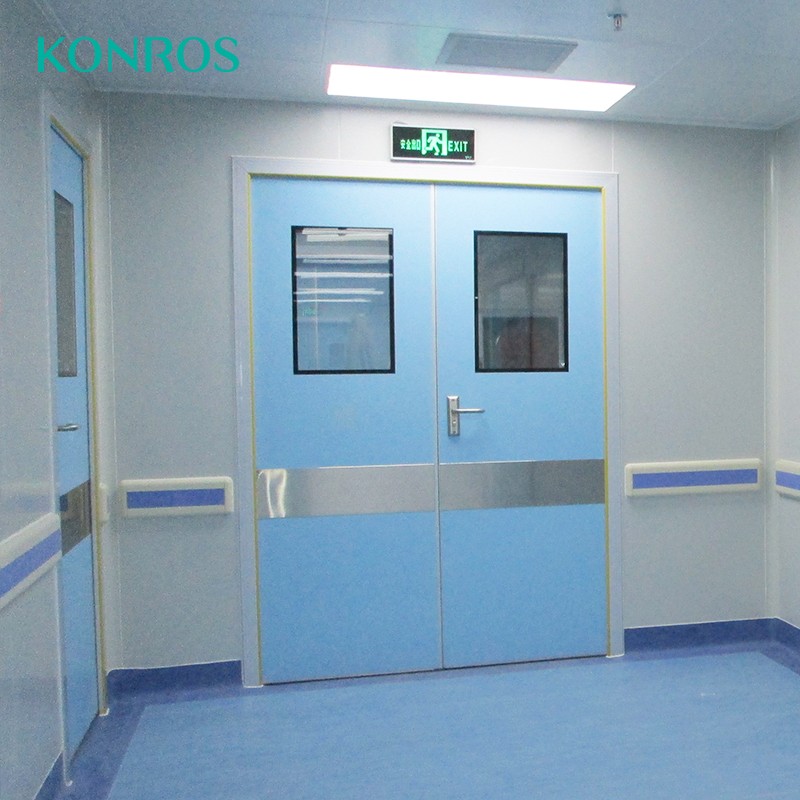
The central sterile supply department is the hardest ordinary environment for a door in a hospital: wet decontamination rooms on one side, dust-controlled sterile stores on the other, and heavy trolleys passing between them all day. Door selection in CSSD is engineering, not decoration - and it rewards being specific about each zone.
Zoning first: three doors, three jobs
A CSSD runs a one-way flow: dirty side receiving, decontamination and washers, inspection and packing, then sterile store and issuing. The doors between these zones are boundary controls - for moisture, for particles, for workflow discipline - and each boundary wants a different door. Specifying one door type for the whole department is the classic expensive economy.
Decontamination zone: hot, wet, chemically unfriendly
Doors and frames facing washer-disinfectors and autoclaves live in steam and chemical residues. Stainless steel faces, welded or sealed edges, and frames without crevices are the baseline; hollow profiles that trap moisture grow problems you cannot clean. Vision panels here take glazing rated for the temperature swings rather than the cheapest sealed unit. Sliding doors shine on the washer aisles - full width for trolleys, no swing into a wet floor, corrosion-resistant track.
Packing and inspection: traffic without the water
Between wash and sterile store, the doors carry people and instrument trolleys. Semi-hermetic or hermetic sliders with radar and foot control keep gloved hands sterile and baskets moving; smooth HPL or steel faces wipe down at shift end. This is also where interlocks start appearing on well-run departments: the boundary between dirty and clean sides should open one way, deliberately.
Sterile store: the cleanroom-grade boundary
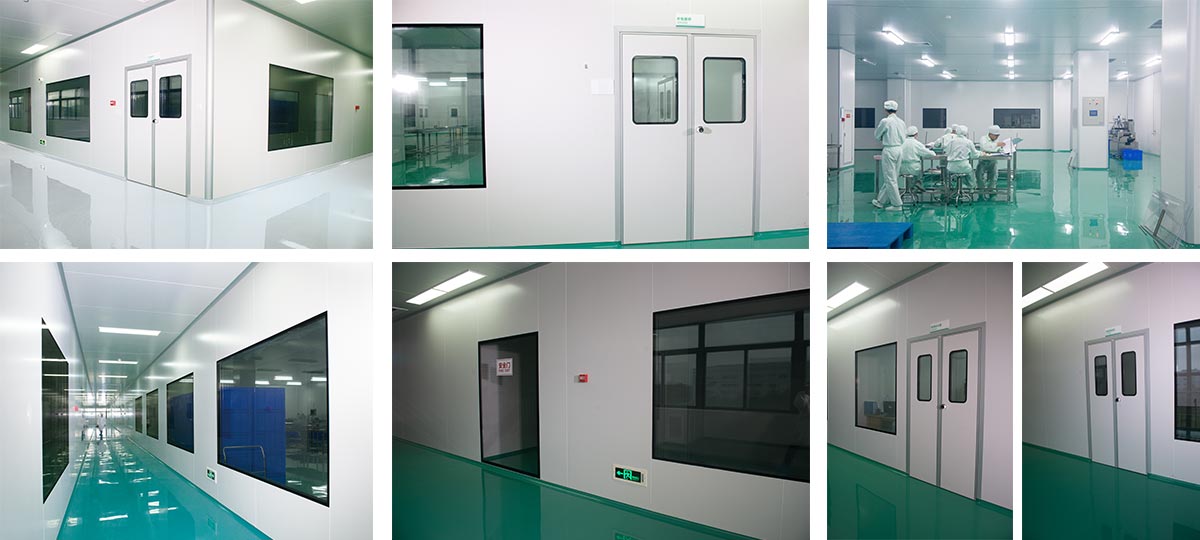
The sterile store is the department's cleanroom - filtered air, positive pressure, particle discipline. Doors here earn their keep as hermetic sliders with measured leakage, ideally interlocked in pass-out hatches for issuing without door openings. Every full-door opening exchanges the air you paid to filter; hatches and discipline keep the store clean without heroic HVAC.
Trolleys: the load that designs the door
Wire trolleys full of instrument trays are heavy, narrow-wheeled and merciless on thresholds and bottom rails. Specify kick plates and reinforced leading edges on every swing leaf, flat or ramped thresholds with seals that survive being run over, and track systems rated for wet cleaning. Watch the clear width against the widest trolley plus a gloved hand on each side - the measurement is always wider than the drawing.
A practical specification summary
- Washer/decontamination aisles: stainless sliding doors, sealed frames, temperature-rated glazing.
- Clean-dirty boundary: interlocked hermetic sliders, foot and radar operation.
- Sterile store: hermetic slider with leakage report; pass-out hatches for issuing.
- Everywhere: kick plates, flat thresholds, hardware rated for wet daily cleaning.
Match the door to the zone and the CSSD runs like a machine; specify by habit and the department fights its doors until the next refurbishment.
Zone-by-door quick table
- Dirty receiving / unloading: wide steel-faced swing or slider, kick plates, washdown rating - the department's roughest doorstep.
- Washer-disinfector aisles: stainless sliding doors, sealed frames, temperature-tolerant glazing - steam and chemistry decide the materials.
- Inspection / packing: hermetic or semi-hermetic sliders, foot and radar activation, HPL or steel faces - clean but human-paced.
- Sterile store: hermetic slider with leakage evidence, pass-out hatches for issuing - the cleanroom corner of the department.
- Clean-dirty boundary: interlocked doors, one-way discipline enforced by hardware instead of hope.
Details that decide CSSD door survival
- Thresholds: flat or gently ramped, seal-compatible, and rated to be run over by a loaded trolley all shift.
- Bottom rails and tracks: the places debris and water collect - daily-cleanable geometry beats clever profiles.
- Glazing: rated for thermal swings near washers; fogging on a washer aisle window is a supervision problem, not an aesthetic one.
- Interlock logic: status indication both faces, monitored bypass for emergencies, and a regime the staff actually follow.
FAQ
What doors does a CSSD need?
Three personalities: stainless washdown doors on the decontamination side, hermetic sliders with contactless activation through inspection and packing, and a leakage-evidenced hermetic boundary - with pass hatches - at the sterile store. One door type everywhere is a specification smell.
Why stainless steel for decontamination doors?
Steam, chemicals and daily hosing - stainless with sealed or welded edges ignores all three; hollow profiles and organic coatings age visibly and clean badly. The washer aisle is the wrong place to economise.
Do sterile store doors need to be hermetic?
Yes - the store is a classified clean zone holding pressure against dirtier neighbours. Hermetic sealing with evidence, plus pass hatches to avoid full-door openings for every issue, is the standard pattern.
Should CSSD doors interlock?
The clean-dirty boundary should - interlocks (or alarmed logic) stop both doors opening at once, which is the moment the department's one-way discipline actually matters. EU GMP-style interlock thinking translates here directly.
How wide should CSSD doors be?
Measure the widest loaded trolley plus hands, then add margin - and check the turn from the corridor into the aisle, where the real geometry lives. Widths are cheap on paper and priceless on site.
The trolley test that outranks every datasheet
Bring the heaviest loaded trolley to the department walkthrough and push it through every door, both ways, at working speed. Doors that pass datasheets and fail trolleys are a CSSD tradition; doors specified after the trolley test are not. The equipment list and the door schedule belong in the same conversation, ideally with the CSSD manager holding the keys.
How long do CSSD doors last?
Specified correctly - stainless where wet, hermetic where classified, hardware rated for trolley life - they serve the department between refurbishments, with seals and rollers as the recurring consumables. Specified by habit, they serve as a recurring topic instead.
Can pass-through hatches replace doors entirely?
For materials, hatches carry most of the traffic and protect the store's pressure; people still need doors. The pairing - hatch for goods, hermetic door for staff - is the pattern that runs the best departments.
Can CSSD doors integrate with tracking systems?
Yes - interlock logic and door status feed traceability platforms where the department wants them. The door as a sensor in the workflow, not just a barrier in it.
What floor finishes suit CSSD thresholds?
Coved, seamless, trolley-rated - the threshold is part of the floor's cleanability, not a strip of metal between two regimes. Specify them together; clean them together.
Wet on one side, classified on the other, trolleys everywhere - the CSSD door is engineered for exactly that sentence.