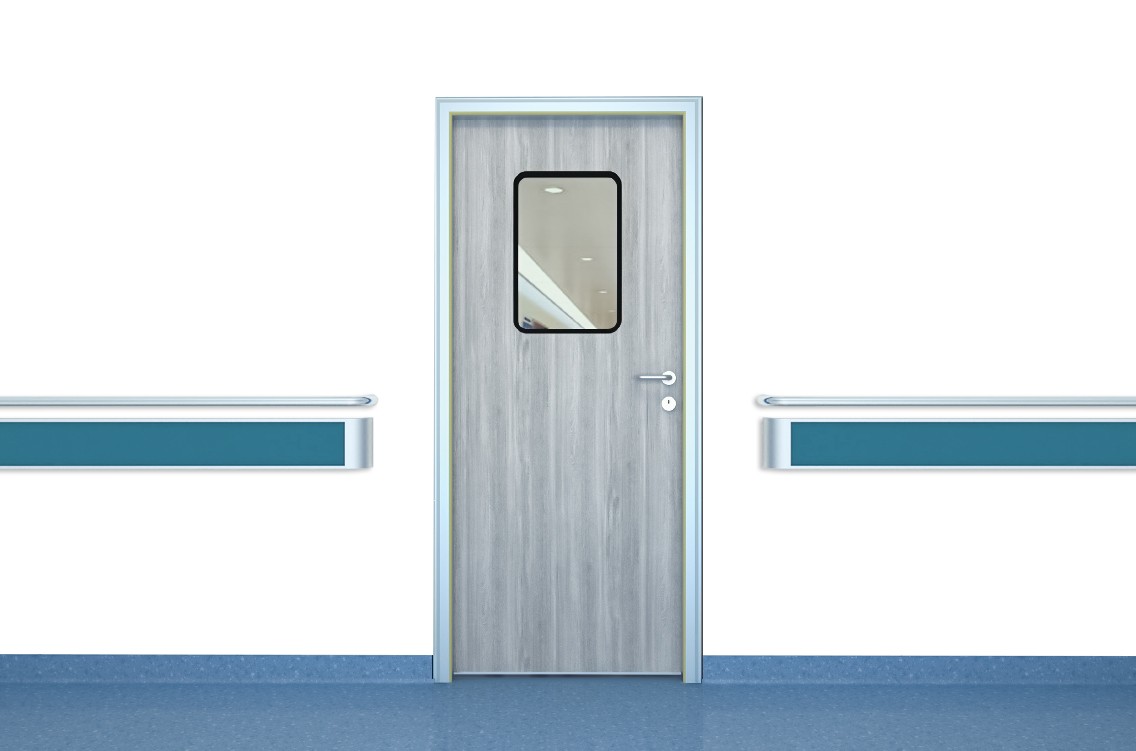
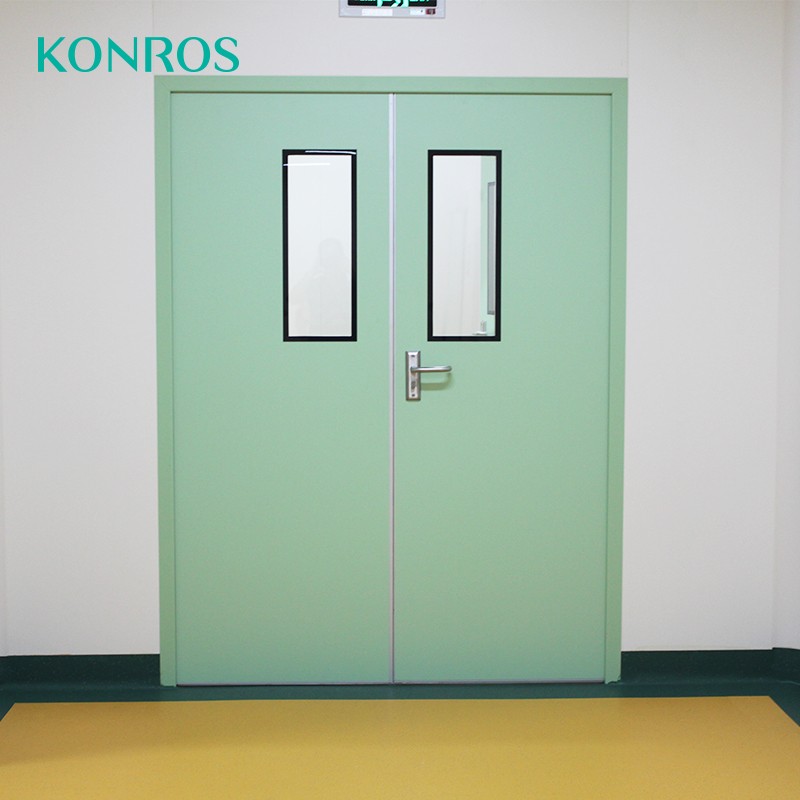
Fire-Rated Doors in Hospital Projects: Compliance Basics for Importers
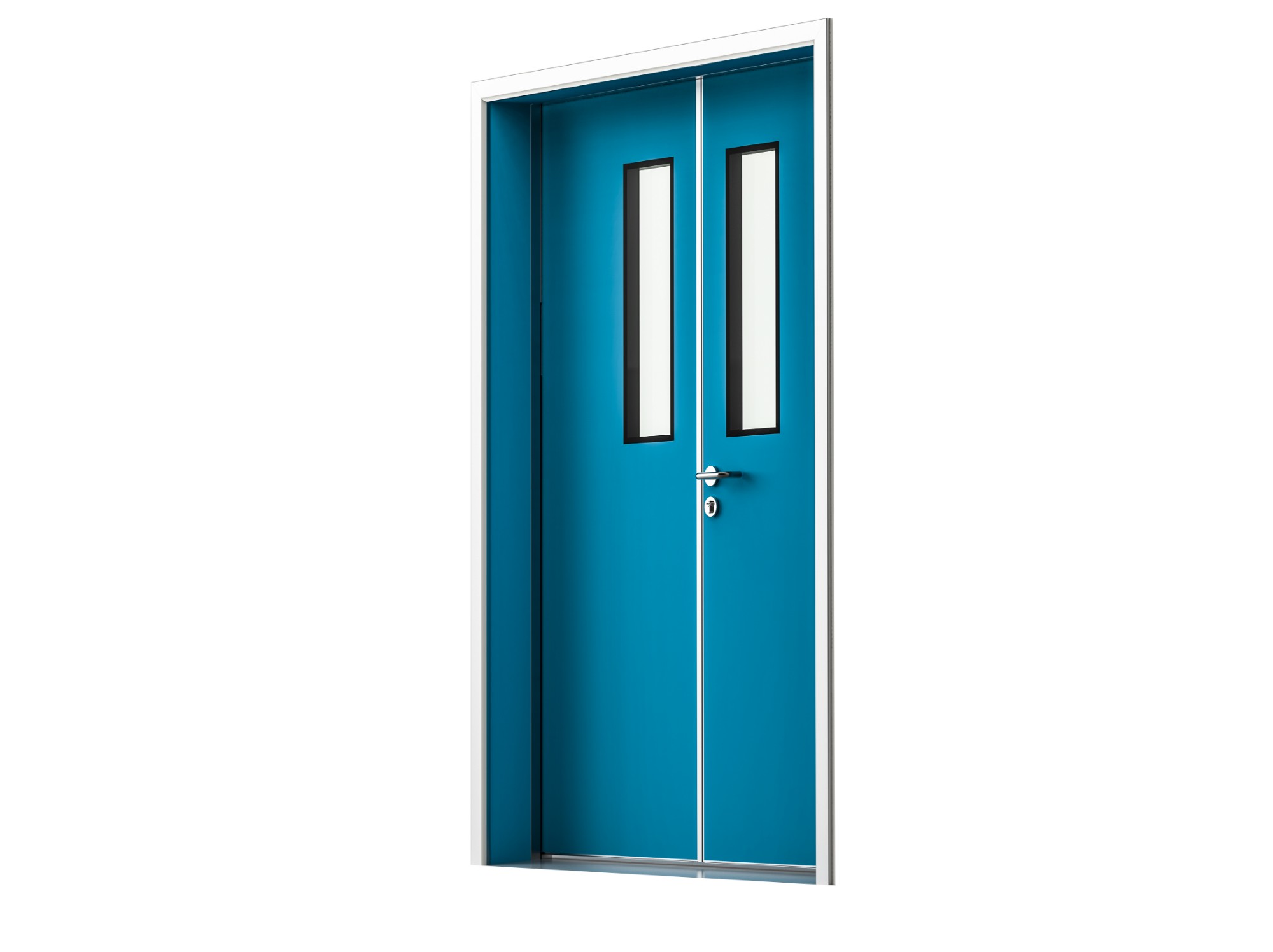
Fire doors fail inspections for predictable reasons: substituted hardware, un-rated glazing cut into the leaf, frames that do not match the tested assembly. For importers supplying hospitals, understanding the compliance logic prevents costly rejections - and it is simpler than the paperwork makes it look.
A rating belongs to an assembly, not a door
The fire number - EI 30, EI 60 under EN 13501 classification - was earned by a tested assembly: leaf, frame, hinges, closer, seals and glazing together, in a laboratory, as a set. Swap any element for an untested equivalent and the rating no longer claims anything. This single idea explains most site failures: the leaf is certified, but the closer was value-engineered, the hinges were whatever the installer had, and the glazing was cut to a different size on site.
What the classification actually says
Under EN 13501-1, EI ratings combine integrity (flames and hot gases do not pass) and insulation (the unexposed face stays cool enough). EI 30 holds both for 30 minutes, EI 60 for an hour. Hospital compartment walls and cross-corridor doors typically call for EI 30 or EI 60 depending on the fire strategy; UK practice details the placements in HTM 05-02. The strategy decides the number - the door supplier's job is to prove the assembly earns it.
Glazing and vision panels
Fire-rated glazing is not ordinary glass with confidence. It is a rated assembly of its own - the pane, the beads, the sizes - matched to the door's test evidence. Cutting a bigger window into a certified leaf on site is the fastest way to turn a rated door into an expensive decoration. If the project wants more glass, order it glazed from the factory, tested as such.
Hospital doors that are also fire doors
The complication hospitals add: a compartment door may simultaneously be a hermetic boundary, a lead-lined barrier, or an automatic traffic door. Each function brings its own evidence - leakage report, shielding certificates, EN 16005 commissioning - and the assembly logic applies to all of it. The supplier's real job is keeping the set coherent: one door, one file, every element accounted for.
Documentation that survives an inspector's visit
- Classification report and CE/DoP for the doorset as supplied.
- Test evidence covering the exact glazing size fitted.
- Hardware schedule matching the tested assembly - hinges, closer, locks, seals.
- Installation records with the fitting instructions actually followed.
- Label and marking on the installed set, legible after handover.
Site discipline: where ratings go to die
- Nothing gets swapped without checking the schedule - one closer is not every closer.
- No site-modified glazing, no drilled leaves, no "temporary" fixes that become permanent.
- Seals are checked at every maintenance round; intumescent strips are consumables with opinions.
- Doors required to be closed stay closed - hold-open devices, where fitted, are certified ones on the alarm circuit.
The rating is bought from the laboratory and kept on the site. Buy the assembly, keep the file, change nothing without the schedule - and inspections become administrative.
EI 30 or EI 60: reading the fire strategy
The rating follows the wall: compartment boundaries and cross-corridor doors inherit their requirement from the fire strategy, not from the door supplier's stock list. EI 30 serves many ward compartment positions; EI 60 appears on higher-demand boundaries and protected shafts. The consultant's drawing states the number; the doorset's paperwork must earn it as an assembly.
Site rules that keep certificates alive
- One schedule, no substitutions: the hardware schedule is part of the rating - closers, hinges, locks, seals exactly as tested.
- Glazing only from the factory, in tested sizes - site-cutting a certified leaf is how a fire door becomes a door-shaped object.
- Seals checked at every round: intumescent and smoke seals are consumables with pride; replace worn, never paint over.
- Closed means closed: hold-open devices, where strategy allows them, are certified units on the alarm circuit - doorstops are not a fire strategy.
- Labels legible at handover and at every inspection after.
FAQ
What fire rating do hospital doors need?
Whatever the fire strategy says for each position - commonly EI 30 or EI 60 on compartment and cross-corridor doors in hospital practice (EN 13501 classification; UK placements detailed in HTM 05-02). The strategy sets the number; the assembly proves it.
Can a fire door also be hermetic and lead-lined?
Yes, as a certified multi-function assembly - but every claim must be evidenced on the same set: fire classification, leakage report, shielding certificates. The expensive door is the coherent one; the dangerous door is the compromise one.
Why do fire doors fail inspection?
Substituted hardware, un-rated site glazing, mismatched frames, painted-over seals, and doors wedged open. None of these are manufacturing failures - all of them are schedule-discipline failures.
Who can install a certified fire doorset?
Installers working to the manufacturer's fitting instructions, with the installation recorded. The rating belongs to the assembly as installed - competence at this step is the certificate's last metre.
How often are fire doors inspected?
On the building's fire safety regime - formally at scheduled periods and after any work touching the door, with seals, hardware and labels on the checklist. The logbook is the fire door's biography; keep writing it.
What documents should arrive with certified fire doorsets?
Classification report and declaration of performance for the doorset as supplied, test evidence covering the exact glazing fitted, the hardware schedule matching the tested assembly, fitting instructions, and installed labels. One file, one door, one truth.
Can damaged fire door seals be replaced on site?
With the correct replacement seals per the manufacturer's schedule, yes - it is maintenance, not surgery. Painting over them, packing them, or improvising substitutes is how a rated door quietly resigns.
The inspector's first five minutes
Inspectors do what anyone sensible would: read the label, tug the door, look at the seals, glance under it, and ask for the file. A doorset with a legible label, a smooth close, intact seals and a matching schedule passes those five minutes every time. The theatre of compliance is smaller than the industry pretends - it is a label, a latch and a ledger.
Can fire doorsets be repainted on site?
Cosmetic repainting within the manufacturer's finish guidance, yes; slathering seals and hardware in paint, never. When in doubt, the fitting instructions - which travelled with the door for exactly this moment - say what is paint and what is performance.
Who keeps the fire door documentation?
The building's responsible person, per the fire safety regime - typically facilities management, with the handover file as the living document. Documentation is a duty with a postcode, not a PDF with a password.
Can fire doorsets include vision panels?
Yes - rated glazing in tested sizes, factory-fitted, evidenced in the assembly's file. The panel is part of the tested design; site-cut glass is a confession, not a modification.
How do hold-open devices stay compliant?
Certified units on the alarm circuit, tested with the system, released by the strategy they serve. A wedged fire door is a compliance failure wearing a doorstop.
Buy the assembly, keep the file, change nothing unsigned - fire compliance is mostly the discipline of leaving things as tested.