New Frameless Glass Hermetic Sliding Door HS-150 Added to Our Range
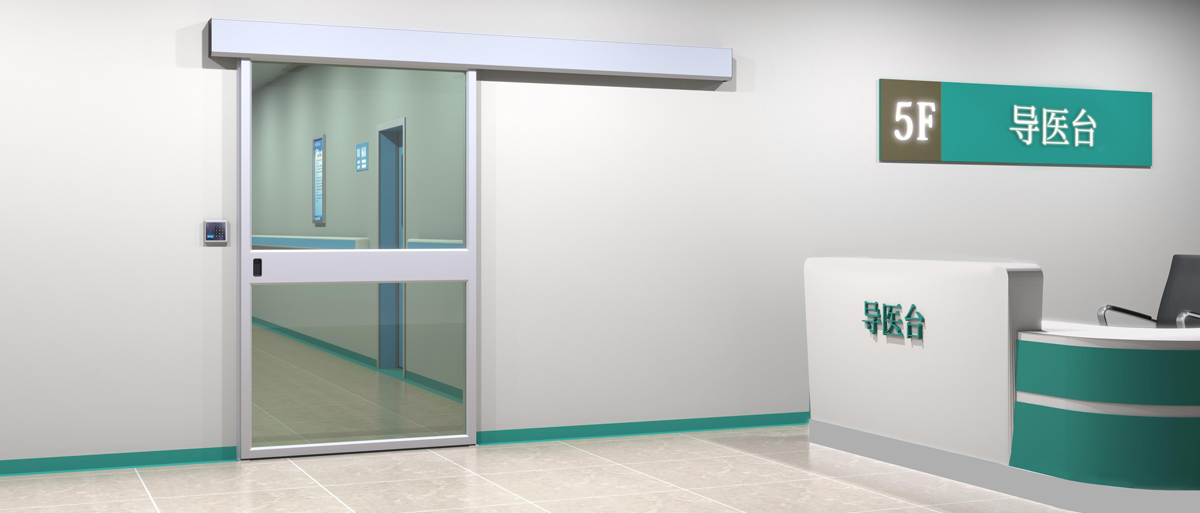
Fenghe has officially added the HS-150 frameless glass hermetic sliding door to its product range. It was developed against a specific, recurring request from ICU and laboratory projects: maximum visibility through the door, without surrendering the airtight performance the room depends on. Both halves of that sentence are load-bearing - here is how they were reconciled.
Why visibility became a specification item
In high-dependency care, the door is part of the monitoring system: nurses read the bed and the pumps through the threshold instead of opening it, and every opening is a noise event, a pressure event and an interruption. Laboratories want the same sightlines for supervision and safety. Conventional hermetic doors answer with a vision panel in an opaque leaf - fine, until the observation protocol wants the whole width visible. All-glass architectural sliders deliver the view and leak like a letterbox. The HS-150 was drawn in the gap between those two products.
What "frameless" means here - and what it doesn't
The leaf is a large double-glazed unit carried on slim anodized aluminum stiles - the visual language of a frameless glass door, the engineering of a hermetic one. Full-perimeter brush and fin seals ride the stile edges; the compression cycle on closing is the same clamp-onto-seals action as our opaque hermetic line. The stiles exist because seals need something honest to mount on: the achievement is not the absence of a frame, it is a frame thin enough to read as glass while carrying a measured leakage class.
Operation: familiar on purpose
The HS-150 shares the 24V DC brushless operator platform of the HS range - soft motion, quiet running, radar activation with presence safety, battery backup - so wards do not learn a new door language when a glass unit replaces an opaque one. Foot and touchless activation are available for the same sterile-hands logic as every clinical door we ship.
Where it earns its place
- ICU and HDU bays - whole-width observation from the nurse station line.
- Isolation and protective environments - supervision without door cycles, sealing without compromise.
- Laboratories and clean zones - supervisory sightlines with pressure-cascade sealing.
- Consultation and pediatric areas - visibility that softens the space while the door keeps working clinically.
Notes for specifiers
- Ask for the leakage report for the glazed configuration, not the opaque equivalent - glass leaves are the worst case and deserve their own numbers.
- Glazing options include laminated and, for imaging-adjacent positions, leaded laminated glass at matched equivalence.
- Confirm the operator class against the glazed leaf weight; large glass is heavy glass.
- Sizes: the HS-150 platform runs to wide single leaves and double-leaf sets - send the clear-width requirement and we confirm the configuration.
The HS-150 is available now. Send us the room drawings and the observation requirement; we will return a configuration, a sealing number and a price - usually within a working day.
Specification orientation
- Leaf: large double-glazed unit on slim anodized stiles - the frameless look with hermetic seal mounting.
- Sealing: full-perimeter brush and fin seals with the compression close cycle of the HS hermetic family.
- Operator: 24V DC brushless platform - soft motion, quiet running, battery backup option.
- Activation: radar with presence safety as standard; foot and touchless control for clinical hands.
- Glazing options: laminated safety builds; leaded laminated glass at matched equivalence for imaging-adjacent positions.
HS-150 against the alternatives
- Vs a standard hermetic door with vision panel: whole-width observation instead of a window - the ICU and laboratory use case in one line.
- Vs an architectural glass slider: measured leakage instead of showroom draughts - visibility with the pressure regime intact.
- Vs a full frameless wall system: a door's duties - cycles, safety, sealing - delivered by a door, not a partition pretending.
FAQ
Is a frameless glass door really hermetic?
The HS-150 is: slim structural stiles carry full-perimeter seals and the same compression close as the opaque hermetic line, with the leakage report for the glazed configuration to prove it. "Frameless" here is a visual language, not an engineering confession.
Where is a glass hermetic door worth specifying?
ICU and HDU bays, isolation and protective environments, laboratories and clean zones - anywhere supervision through the door beats opening it. The sightline is a clinical instrument; the door keeps it calibrated.
What about privacy for the patient?
Glazing options include privacy solutions - blinds integrated in the double unit and switchable film among them - chosen per ward culture. The sightline belongs to the clinical team; the privacy setting belongs to the patient's hour.
Can the HS-150 be lead-lined?
The equivalent route for glass is leaded laminated glazing at the room's matched equivalence, with lined stiles and frame sections completing the barrier. Imaging-adjacent observation walls take this configuration routinely.
How do I order one?
Send the clear-width requirement and the observation brief; we return the configuration, the sealing number for that configuration and a price. The drawings answer most of it before the first call.
What sizes does the HS-150 cover?
Wide single leaves and synchronized double-leaf sets across the HS platform's range - send the clear-width requirement and the equipment list; the configuration comes back with the sealing number for exactly that build.
How does the HS-150 handle cleaning and disinfection?
The stiles and rails take clinical agents in their anodized and coated finishes, glazing cleans on the ward schedule, and there are no creviced trims to collect what cloths leave. Visibility should never cost hygiene its standards.
What "visibility without compromise" costs in practice
The HS-150 exists because the alternative was always a trade: observation through an opaque door's window, or sealing sacrificed to architecture. Pricing follows configuration like every hermetic set - glazed leaves, wide spans and leaded options each move the number - but the design argument is settled once: the sightline and the pressure regime are no longer in negotiation.
How does the HS-150 handle high-traffic corridors?
On the same duty cycle logic as the HS platform: brushless operator, rated hardware, presence safety. Traffic wears consumables - seals, rollers, belts - which the maintenance schedule expects and the logbook tracks.
Can the HS-150 pair with pass-through hatches in labs?
Yes - glazed hermetic doors and interlocked hatches are a natural pairing for laboratory boundaries: people through the door with full sightlines, materials through the hatch with interlock discipline.
What maintenance does glazing need?
The ward's cleaning schedule and nothing more - sealed units, wipe-clean stiles, no creviced trims. Visibility that costs hygiene its standards is a design error, not a cleaning problem.
Can the HS-150 carry hospital branding?
Stile finishes and glazing interlayers accept tasteful identity work - ODM clients routinely badge the set as their own. The architecture stays clinical; the branding rides it.
The sightline is a clinical instrument; the HS-150 keeps it calibrated and sealed at once.