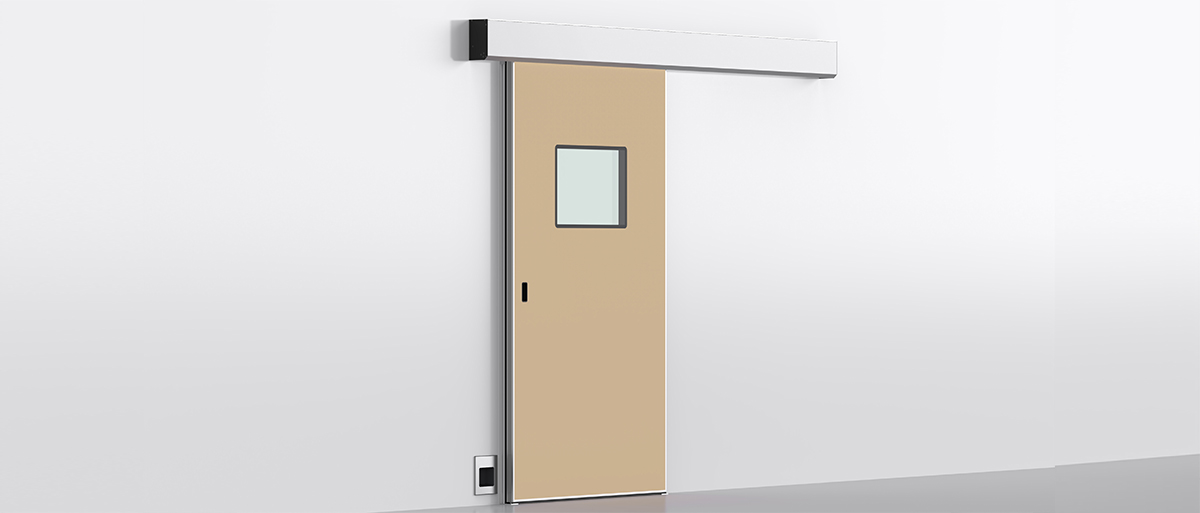
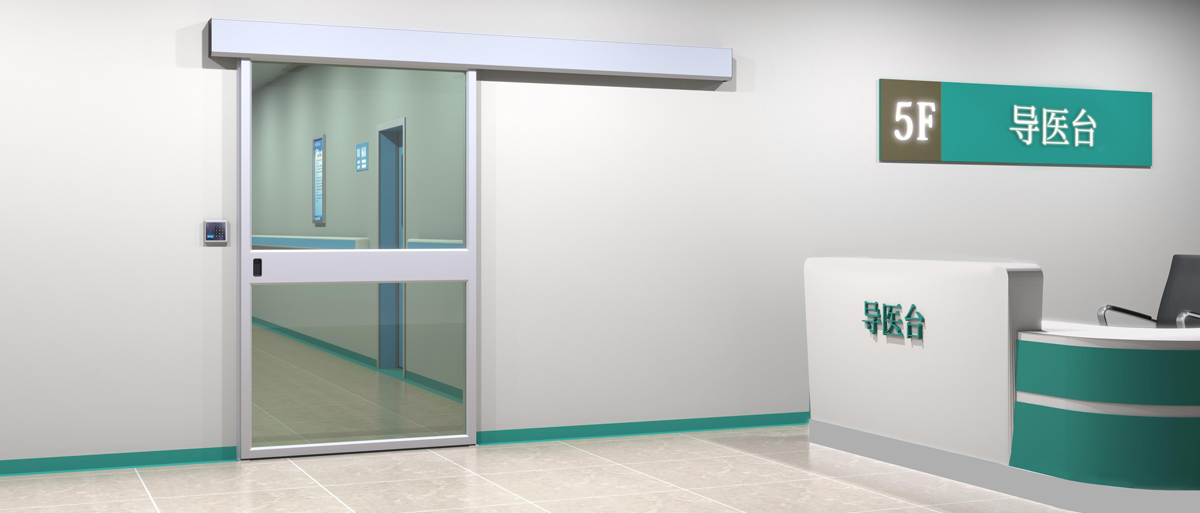
SW-140 Sliding-Swing Combined Hermetic Door Released for Escape Routes
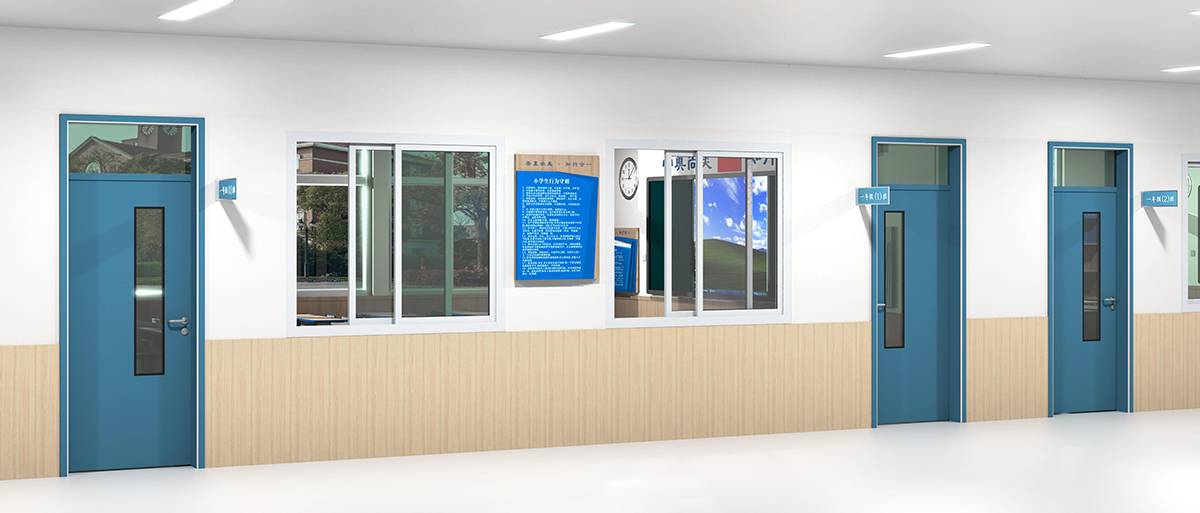
Fenghe has released the SW-140, a sliding-swing combined hermetic door designed for hospital areas where escape routes and airtightness must coexist. Designers have asked for this combination for years; here is what shipped, and why it matters on the drawings where it appears.
The problem it solves: two requirements, one opening
Operating theatre complexes and ICUs sit on protected escape routes. The ventilation strategy demands a hermetic boundary - full-perimeter compression seals, measured leakage, pressure cascades maintained around the clock. The fire strategy demands that the same opening releases for evacuation: full clear width, openable by anyone, without tools, without power. For years projects resolved the conflict by compromise doors that did neither job well. The SW-140 stops choosing.
Daily mode: a full hermatic slider
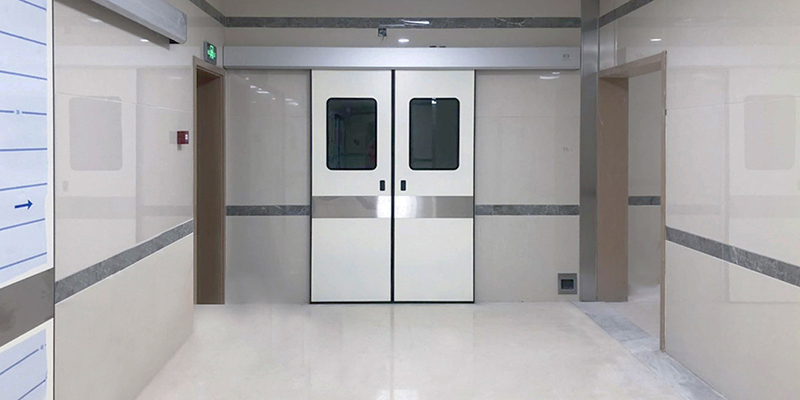
In normal service the SW-140 behaves as a standard automatic hermetic sliding door: soft start and soft stop, hands-free radar activation with presence safety sensing, and the compression cycle that clamps the leaf onto its perimeter seals on every close. Sealing performance belongs to the same family as our HS theatre line - which is the point: the escape capability costs nothing in daily airtightness.
Emergency mode: the breakout
When the breakout function engages, the leaf releases from the running gear and pivots forward like a swing door - the full clear width becomes an escape route in seconds, openable by hand, no power required. After the event the leaf re-locks into the track and the door returns to hermetic service. Two details decide whether this feature is real or ornamental: the release force, which must be low enough for any adult, and the re-engagement, which must not need a factory visit. Both are specified and both should be tested at commissioning - with the ward manager watching, not just the installer.
Where projects specify it
- Operating theatre complexes where the theatre-to-corridor boundary sits on an egress route.
- ICU and high-dependency bays - crash-cart speed by day, evacuation width by night.
- Imaging corridors with lead-lined leaves: shielding and escape in one assembly.
- Clean zones with escape-route code conflicts - the classic "interlock or egress" argument, resolved by hardware instead of meetings.
Specification notes for tenders
- State the required leakage class for daily mode - the breakout mechanism is not an excuse for weaker sealing.
- Ask for the release-force figure and the re-engagement procedure in writing.
- Confirm battery behaviour: power failure must not disable either mode.
- Where the leaf is lead-lined or glazed, check the operator rating against the real weight - breakout adds hardware to the leaf.
The SW-140 is available now in single and double-leaf configurations, with the standard option sheet of the HS range: glazing packages, activation sets, and shielding. Send us the door schedule and the escape-route drawing - those two documents are the whole conversation.
Technical orientation
- Configurations: single and double-leaf sets; wide clear passages for bed and equipment routes.
- Daily mode: full hermetic compression sealing, soft start/stop motion, radar and foot activation with presence safety.
- Emergency mode: hand-force breakout releasing the full clear width; re-engagement without factory visit.
- Options: glazing packages including laminated and leaded glass, lead lining to the physicist's plan, interlocks and access control.
- Evidence: leakage report for the quoted configuration; doorset documentation at handover.
Preparing the site and the schedule
- Reserve the wall pocket and head-track support at design stage - breakout hardware adds obligations the structure must meet.
- Confirm power positions for the operator and any access control.
- Put the release-force and re-engagement test on the commissioning sheet, with ward representation present.
- Train the re-engagement once, log who was trained - the function's second life is an operational habit.
FAQ
What is a sliding-swing breakout hermetic door?
A door that works as a hermetic automatic slider every day and releases into a swing door for evacuation - full width, hand-force, no power needed. Daily sealing and emergency egress in one assembly, each done properly.
Does the breakout function weaken the sealing?
Not in a properly engineered set - the compression cycle and seals are those of the hermetic line. The proof is the leakage report for the breakout configuration itself; ask for exactly that document.
How is the breakout re-set after use?
By design, on site, without factory service - the leaf re-engages the running gear and the door returns to hermetic service. The commissioning test includes doing it once, with witnesses.
Where should SW-140 doors be specified?
Openings where escape routes and pressure boundaries coincide: theatre complexes, ICUs, protected imaging corridors, clean zones with code conflicts. If the consultant is arguing "interlock or egress", this door ends the argument.
Can it be lead-lined and glazed?
Yes - shielding and glazing ride the same option sheet, with the operator rated for the real leaf weight. Hybrid and trauma rooms usually take the fullest version of exactly this build.
How does the SW-140 compare with a standard HS hermetic slider?
Same sealing family, same operator platform, same option sheet - plus the breakout hardware and its structure. In daily use, staff cannot tell them apart; on the worst day of the building's life, only one of them is an escape route.
What maintenance does the breakout mechanism need?
It joins the quarterly round: release-force check, re-engagement trial, lubrication per schedule. The mechanism that has never been exercised since commissioning is a bet, not a system - drill it like the fire brigade drills theirs.
Why the launch matters beyond the catalogue
Breakout hermetic doors change a design conversation: egress and airtightness stop competing for the same opening. Consulting engineers who previously juggled escape-route geometry against pressure boundaries can now specify one assembly that carries both duties with evidence for each. That is the quiet point of the SW-140 - not a new gadget, but a removed argument.
Is the SW-140 available for retrofit projects?
Yes - subject to the standard survey: wall pocket, head structure and power positions. Many breakout installations land in refurbished theatre corridors where escape strategy was updated after the original build.
What tests come with an SW-140 order?
The leakage evidence for the quoted configuration, operator safety compliance, and the breakout release-force verification at commissioning - the door's two personalities each arrive with their own paperwork.
What wall types suit the SW-140?
Block, stud and panel walls all serve with the right pocket and head preparation - the survey decides, the drawings commit. Breakout hardware asks structure to hold what safety releases.
How does the SW-140 price against a standard slider?
Above it, as breakout engineering should be - and below the classic alternative of specifying two doors or a compliant swing assembly where codes conflict. Priced against the argument it removes, it usually wins.
One opening, two duties, full evidence for each - that is the whole product.