How to Read Lead Glass Specifications for X-ray Windows
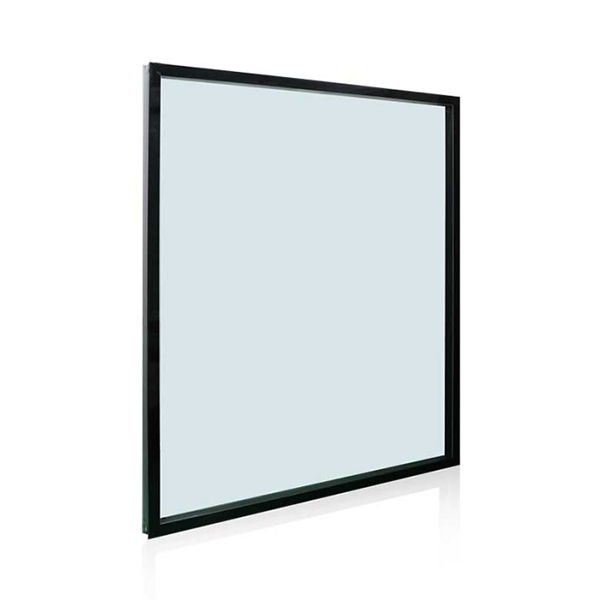
A lead glass window specification is short but dense: lead equivalence, thickness, transmittance, dimensions and tolerances. Misreading any of them produces either an over-priced window or a failed radiation survey - and the difference is decided before the purchase order, not after the physicist arrives.
Lead equivalence: the headline number
Values read like 1.5mmPb, 2.0mmPb, 3.0mmPb - the thickness of pure lead that would attenuate the same way as the glass. The required value comes from the room's shielding plan, which is derived from the equipment and workload, not from the glazing catalogue. Match the window to the barrier it sits in: an observation window in a 2.0 mmPb CT room wall wants 2.0 mmPb glass, and a mismatched window is simply a hole with a nice view through it.
Glass thickness and construction
Leaded glass is supplied as laminated assemblies: leaded layers bonded with clear interlayers, sized for both shielding and safety. Thickness in the specification serves three jobs at once - attenuation, mechanical strength and impact safety - so a "thicker is safer" instinct can quietly double the price without changing the equivalence. Read the laminate schedule, not the overall millimetres.
Transmittance and optical quality
Leaded glass is not water-clear; it carries a slight tint that grows with equivalence. Transmittance in the specification tells you how much light survives, and optical grading tells you how much distortion to expect - relevant for control-room windows where staff read monitors and patient faces through the glass for hours. Cheap assemblies wave like old bottle glass; specify the optical class your sightlines deserve.
Dimensions and tolerances
Order the glass to the frame opening minus the stated clearances, not the frame's nominal size, and confirm which dimension is which on the drawing - windows get rotated on paper more often than anyone admits. Tolerances matter twice here: fit in the frame, and shielding continuity at the edges, where the window meets lead-lined frame sections. A beautiful panel a millimetre small is a radiation gap.
Marking and documentation
Each pane should arrive marked with its equivalence and the manufacturer's traceability, and the shipment should carry certificates matching the order. At acceptance, the markings are checked against the shielding plan, and after installation the survey measures the installed window with the machine running. Paper first, survey last; nothing in between is trust.
Five questions before ordering
- Does the equivalence match this room's shielding plan value?
- What is the laminate schedule behind the overall thickness?
- What optical grade and transmittance are quoted?
- How is the edge finished for shielding continuity in the frame?
- What certification and marking ship with the glass?
Read the five lines, ask the five questions, and the survey becomes a formality.
Worked example: reading a real line
A specification line might read: "Lead glazing window 1200 x 800, 2.0 mmPb, laminate 12 mm, transmittance ≥ 68%, optical class per supplier grade 2, tolerance ±1.5 mm, edge ground for frame seal." Decoded: the equivalence matches a 2.0 mmPb CT-room barrier; the laminate schedule carries the shielding and the impact safety together; 68% transmittance keeps the control-room view workable; the tolerance fits the frame's sealing system; and the ground edge is what makes the window continuous with a lead-lined frame instead of a decorative hole in it.
Mistakes that cost surveys
- Ordering glass to the frame's nominal size instead of the opening minus clearances - a millimetre small is a radiation gap, a millimetre large is a re-order.
- Mismatched equivalence between window and wall - the physicist's plan governs every barrier element; a nicer-view 1.5 mmPb window in a 2.0 mmPb wall fails the room.
- Ignoring optical grade on control-room windows - staff read monitors and patients through that glass for hours; distortion is a daily tax.
- Skipping the marking check at delivery - unmarked panes cannot prove anything to anyone, including you.
FAQ
What does mmPb mean on lead glass?
Millimetres of lead equivalence - the thickness of pure lead that would attenuate radiation identically. The number comes from the room's shielding plan and applies to the whole barrier: glass, frame lining and door leaf as one system.
Is lead glass darker than normal glass?
Slightly - a tint that grows with equivalence, and the transmittance figure on the specification quantifies it. Modern laminates keep clinical sightlines entirely usable even at the higher values.
Can lead glass be cut on site?
It should not be. Leaded laminates are ordered to size with finished edges for frame sealing; site cutting sacrifices the laminate's structure, the edge seal and any claim to verified equivalence.
How do I verify a lead glass window after installation?
Check the pane markings against the shielding plan at handover, then let the radiation survey with equipment running measure the installed window. Marking and survey - paper and physics - close the loop.
Do lead glass windows need frames with lead lining?
Yes - the frame sections and their junctions to the wall lining carry the same equivalence. Glass and frame are one barrier; procurement splits them at its peril.
Can lead glass and lead door equivalence differ?
They should match the same barrier value from the shielding plan - the plan governs the window, the leaf and the frame lining as one system. Mismatched elements inside one barrier are how surveys fail with every component individually "correct".
What optical quality grades exist for lead glass?
Suppliers grade clarity and distortion; the specification should name the grade for sightline-critical positions like control-room windows. The honest test is reading a monitor through the pane at working distance - if the supplier's sample distorts, the certificate will not un-distort it.
Ordering windows and doors as one barrier
The cleanest purchases treat the barrier as the unit: window, door leaf, frame linings and junction details ordered together against the same plan page. Split orders between glazing and door vendors save phone calls at quotation and spend them back at the survey, when the equivalence mismatch surfaces exactly where nobody budgeted - between two suppliers, inside one wall.
How thick is lead glass compared to ordinary glass?
Leaded laminates run thicker than clear glass of the same panel size - attenuation needs mass. The laminate schedule states both shielding and safety roles; thickness alone flatters the specification without explaining it.
Do lead glass windows yellow over time?
Modern leaded laminates hold their clarity for service life; discolouration stories belong to old monolithic installations. Transmittance figures on the current specification are the honest forecast.
Can ordinary glass be used beside lead doors?
Only glazing with stated equivalence belongs in a shielding barrier - ordinary glass is a window in the physics sense as well. Matched leaded laminates throughout the barrier, marked and certified.
How are lead glass windows cleaned safely?
Like any clinical glazing - approved agents, no abrasives, laminated surfaces wiping clean in a pass. The lead is inside the laminate; the cleaning protocol is outside it.
Read the five fields, order to the plan, close with the survey. Lead glass is dense but not difficult.